MagazineTypes and sources of collagen: types I, II, III (part II of the series)
Types and sources of collagen: types I, II, III (part II of the series)
If we are interested in collagen and its action on the human body, it is important to realise that there is not just one collagen. A wide range of types exists, and in the human body alone there are at least 16. Among the most…

If we are interested in collagen and its action on the human body, it is important to realise that there is not just one collagen. A wide range of types exists, and in the human body alone there are at least 16. Among the most important are types 1, 2, 3, 5 and 10 (Roman numerals I, II, III, V and X are also used), while up to 90 % of the collagen in the body is made up of types 1, 2 and 3. (1)
Overview of the most common collagen types and their main benefits
Type 1: This is by far the most widespread and probably also the strongest type of collagen found in the human body. It is made up of eosinophilic fibres that form parts of the body including tendons, ligaments, organs and skin. Type 1 collagen helps in the formation of bones, supports digestive tract health, holds tissues together, is very important for wound healing, and gives the skin elasticity and a youthful appearance.
Type 2: Cartilage is made of this type of collagen and it is also found in connective tissues. The health and function of our joints depend on the state of our cartilage. This type of collagen is therefore beneficial as prevention of joint pain or symptoms of arthritis.
Type 3: Type 3 is made up of reticular fibres and is a main component of the extracellular connective tissues that make up organs and skin. Together with type 1 collagen it helps the skin achieve elasticity and firmness. It forms blood vessels and heart tissues. For these reasons a deficiency of type 3 collagen is associated with a higher risk of vessel rupture, which is often fatal.(2)
Type 4: Type 4 collagen plays an important role in forming the basement membrane in endothelial cells. These cells form the tissue surrounding organs, muscles and fats. Basal laminae are needed for the proper function of nerves and vessels. (3) They surround most of the digestive and respiratory tracts; they can be found in the space between the upper and the deepest layer of skin or tissue. They look like thin layers of gel-like fluid that serve as padding for the tissues above them.
Type 5: This type of collagen is important for the formation of cell surfaces, hair and tissues found in the female placenta. (4)
Type 10: Helps with the formation of bones and joint cartilage. It is useful in healing fractures and repairing synovial joints. It is part of the endochondral ossification process, the morphology of bone formation in mammals. (5)
Sources of collagen
If we are interested in the sources of collagen in our diet, we should focus on foods with a high protein content, including fish, beef and chicken, and eggs. Collagen most often comes from these sources as well.
Beef (bovine) collagen
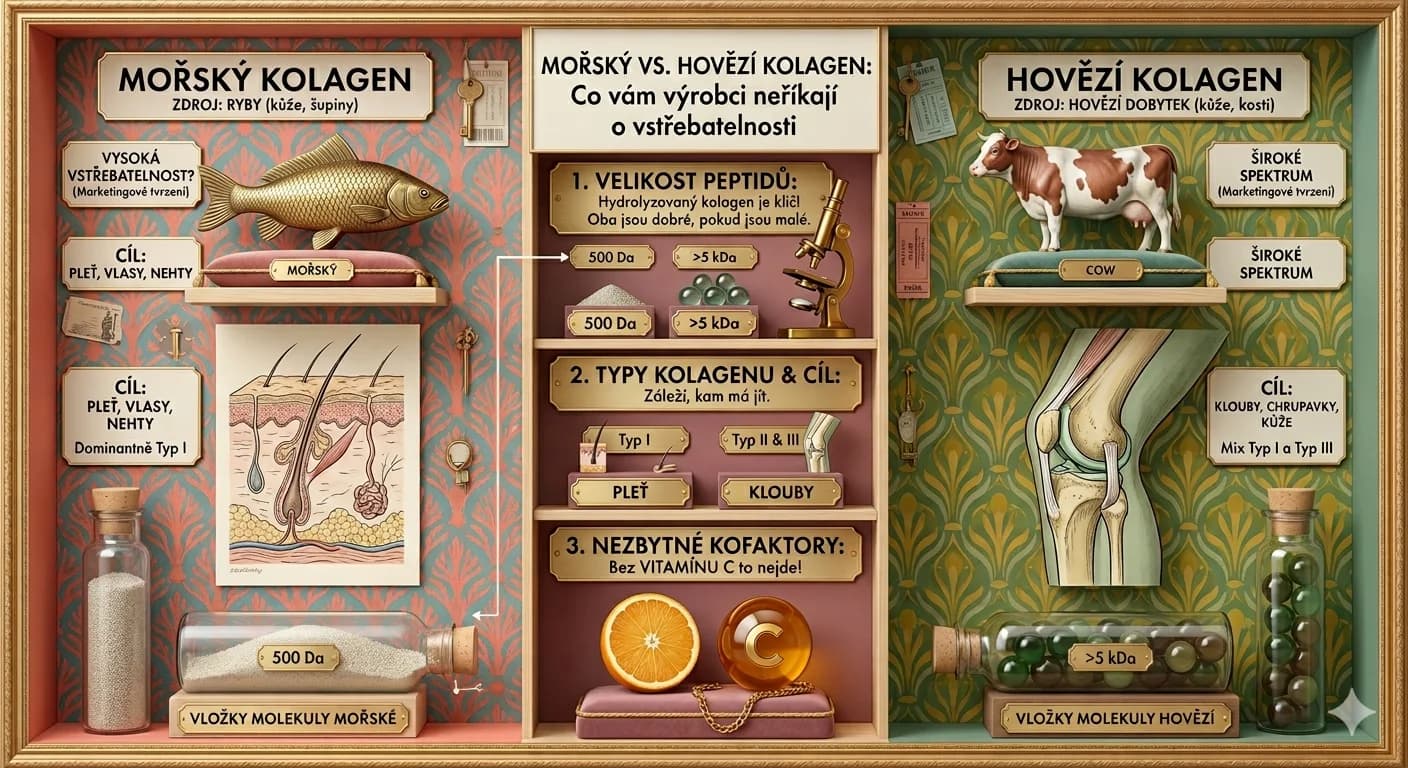
Bovine collagen comes from cattle, specifically from their skin, bones and muscles. It is mostly made up of collagen types 1 and 3. It is rich in glycine and proline. As a result it is useful for producing creatine, building muscle, and it also helps the body create its own collagen. Its biggest drawback is the need to heat-treat it to prevent diseases such as BSE and Creutzfeldt-Jakob disease.
Chicken collagen
Chicken collagen contains mostly collagen type 2, the best for building cartilage. It is a source of chondroitin sulphate and glucosamine sulphate, which makes it beneficial for joint health. It is also the most commonly used collagen in various food supplements.
Fish collagen
Collagen made from fish parts is easily absorbed. It mostly contains type 1 collagen. Its amino-acid content (glycine, proline and hydroxyproline) functions as a skin regenerator with an anti-ageing role. Type 1 collagen is found throughout our entire body, so a higher intake means benefits for joints, skin, vital organs, vessels, digestion and bones. An important component of the triple helix of this collagen is hydroxyproline, whose decline in the body is associated with joint degradation and signs of ageing. Hydroxyproline is formed from a combination of the amino acids proline and is required for the stability, cohesion and strength of collagen. This reaction requires vitamin C, which is why a deficiency of vitamin C can cause a drop in collagen levels in the body.
Fish collagen does not contain prions harmful to the human body, so unlike other kinds of collagen it does not have to be heat-treated. With proper processing this allows it to retain its bioactive function.
Egg collagen
Egg collagen in eggshells and egg whites contains mostly collagen type 1, with smaller amounts of types 3, 4 and 10. It contains glucosamine sulphate, chondroitin sulphate, hyaluronic acid and various amino acids that are beneficial for building connective tissue, healing wounds and building muscle mass.
Thank you for your interest in collagen and in this series, which tries to present basic specialist information in a clear form. In the first part we focused on the effects and benefits of collagen for the body. In the third, final, we will look in more detail at fish collagen and advise you on how to effectively bring collagen into your menu and healthy lifestyle.
If you have any questions and want to know more, do not hesitate to contact us by email at collalloc@collalloc.com.
2017 Powered by collalloc