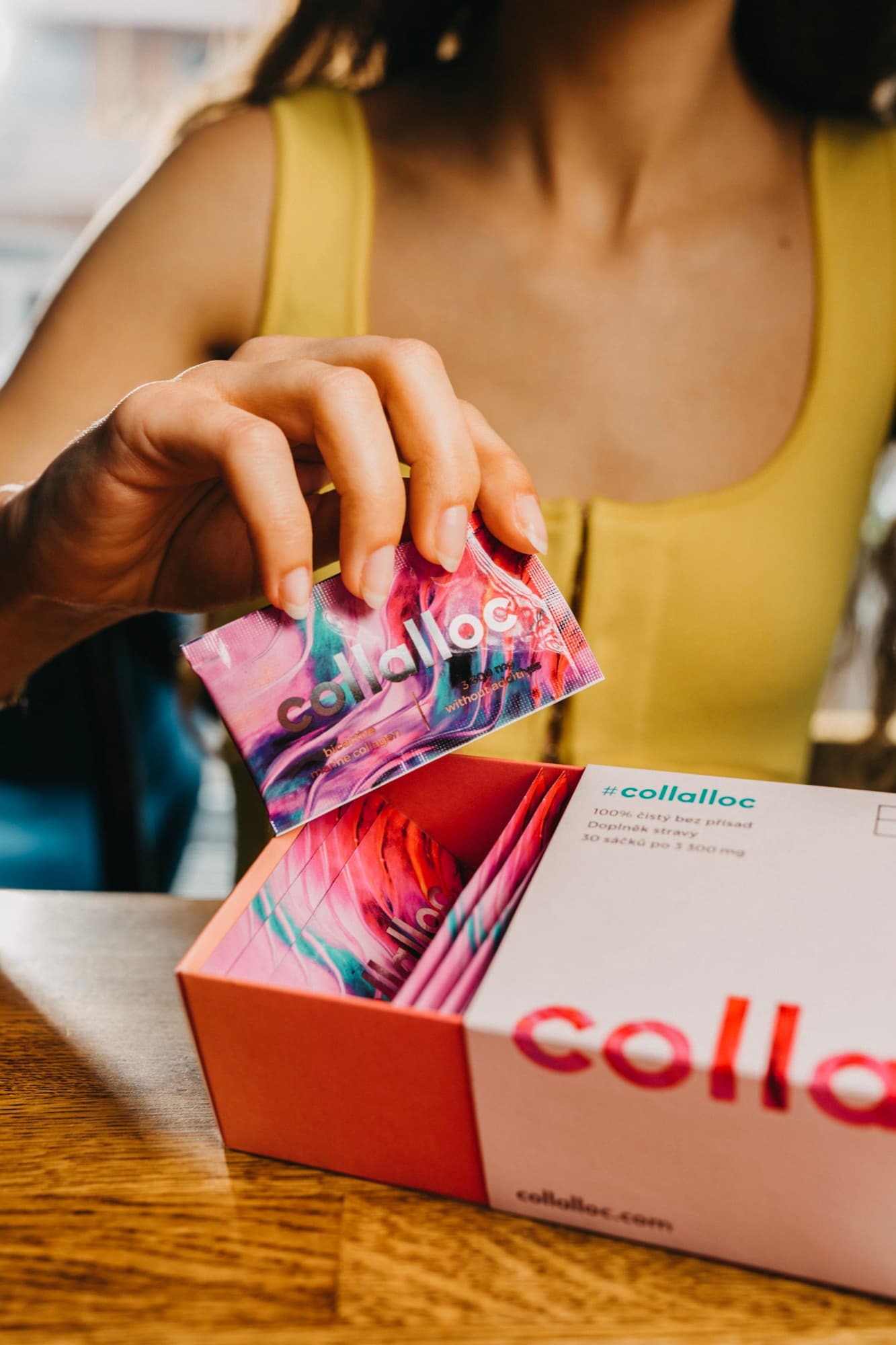
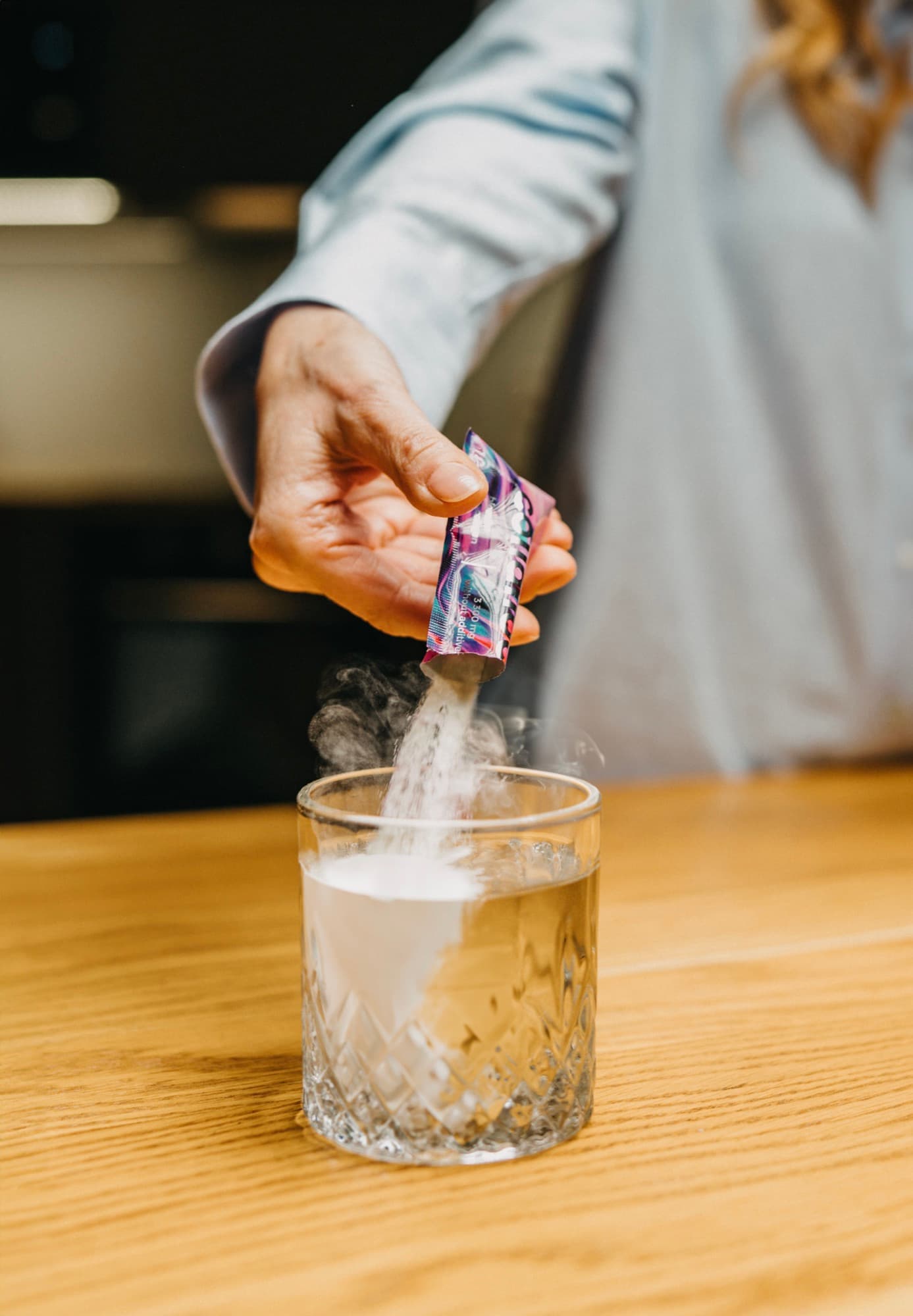
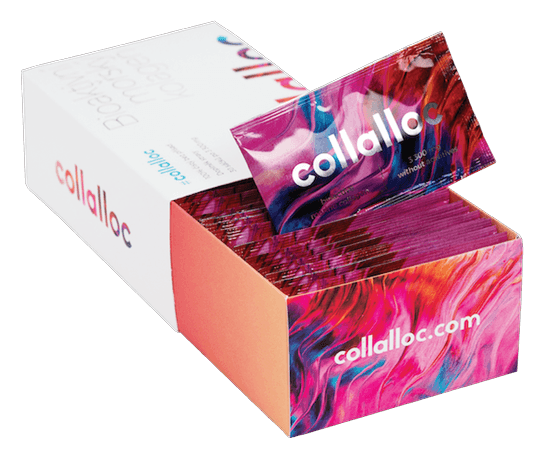
Collagen pleasantly surprised me. The taste is genuinely good, so taking it regularly isn't a chore. The scent is very pleasant too, which isn't a given with supplements of this kind. The only thing that initially threw me off is its rather wild colour, but you get used to that quickly and it's definitely nothing that would put me off using it.


Collagen in sachets
Bioactive marine collagen 500 Da
100% bioactive marine collagen for skin, hair and nails
Food supplement- Skin you’re glad to see in the mirror again: firmer, smoother, more rested
- Strong nails and hair with shine that others notice too
- The end of expensive disappointment: a collagen the body actually absorbs, so you see the difference, you don’t just hope for it
- Your small morning moment, one sachet in a cold drink
- 3300 mgcollagen / dose
- 95%bioavailability
- Type I, II, IIIcomplete profile
30 sachets
🚚 Delivery in 2 days·↩ 14-day returns
Quick answer
collalloc kolagen is bioactive marine collagen in sachets, 30 doses of 3,300 mg. 500 Da molecular weight and 95% absorption (clinically measured). Raw material from off-cuts of wild-caught North Atlantic fish, hydrolysed for us in Switzerland. No fillers, sweeteners or colourings. Recommended course 60 to 90 days. €24.
Science, not wellness
Why 500 Daltons matters
Most collagens on the market come with a molecule of 2,000 to 5,000 Daltons. The gut wall will not let peptides of that size through and absorption drops to around 10%. collalloc is hydrolysed using Swiss TRIPEPTIDE® technology down to around 500 Daltons, with more than 80% of the contents bioactive tripeptides. The bloodstream carries them on, fibroblasts use them as building material for skin, hair and nails. Raw material from sustainable North Sea fishing; hydrolysis in Switzerland.
How we know
- Iwai K. et al. Identification of food-derived collagen peptides in human blood after oral ingestion of gelatin hydrolysates. Journal of Agricultural and Food Chemistry, 2005. doi.org/10.1021/jf050206p
- Oesser S. et al. Oral administration of 14C labeled gelatin hydrolysate leads to an accumulation of radioactivity in cartilage of mice. Journal of Nutrition, 1999. doi.org/10.1093/jn/129.10.1891
These papers describe the mechanism: that ingested collagen peptides appear in the blood and reach connective tissue. They are not the source of the 95% figure, which comes from measurement of our raw material.
Who it suits
Who buys it most often
Past forty, and through menopause
The body’s own collagen production falls with age, and the decline speeds up around menopause. This is the most common reason women start.
Anyone working on hair and nails
Type I makes up most of the collagen in the hair root and the nail bed. Marine collagen is almost entirely type I, so it lands exactly there.
Anyone who loads their body
Running, the gym, long hours on your feet. People who feel the load tend to pick a collagen that contains type II.
Anyone who tried collagen and noticed nothing
The usual reason is not the dose but the size of the molecule. Common hydrolysates run 2,000 to 5,000 Da and only a fraction crosses the gut wall.
Before you choose
Marine or bovine collagen
The most common question before a first purchase. The answer most sites give is “marine absorbs better”. That is a shortcut. Absorption is not decided by the animal, it is decided by how finely the collagen has been broken down.
| Marine | Bovine | |
|---|---|---|
| Source | Fish skin and scales | Cattle hide, bone and cartilage |
| Dominant type | Type I | Type I and III |
| Molecular weight | Depends on hydrolysis; ours is around 500 Da | Depends on hydrolysis; commonly 2,000 to 5,000 Da |
| Not suitable with | A fish allergy | A beef allergy, some religious restrictions |
| Taste | None, when it is pure | None, when it is pure |
The difference in type is real: marine collagen is almost entirely type I, the type that dominates skin, hair and nails. The difference in absorption, though, comes from the hydrolysis rather than the origin. Bovine collagen broken down to tripeptides absorbs just as well as marine collagen of the same size. So look for daltons on the label, not just the word “marine”.

Origin
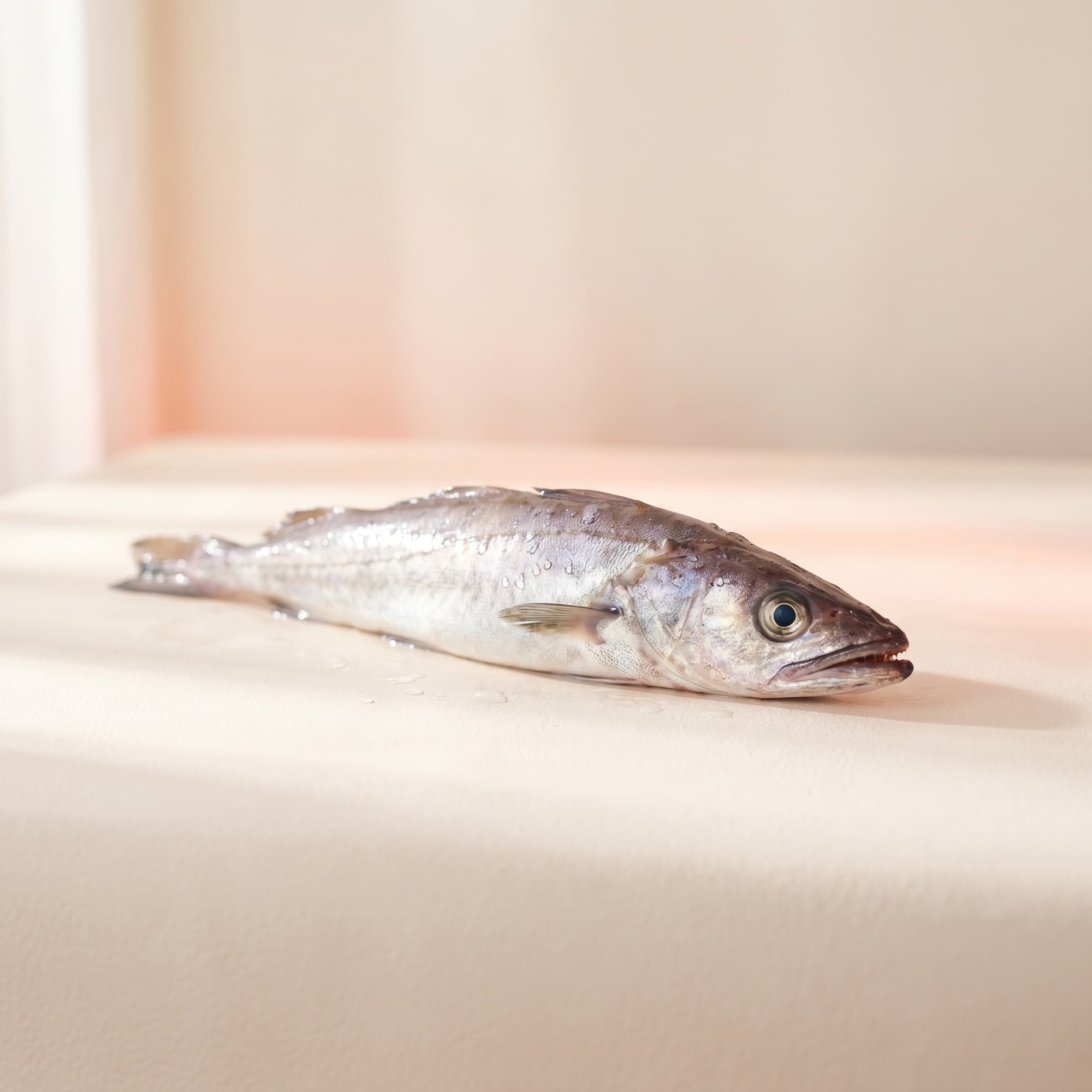
From sustainable North Sea fishing
Our collagen comes from the skin of wild North Sea fish. Not from fish farms, and not from fish caught for it. It is a by-product of fishing for food: the part of the fish that would otherwise end up as waste becomes a raw material of the highest purity. A source that does not strain fish stocks or the sea.

Effect
A small molecule, a big difference
What matters is not how much collagen you drink, but how much your body absorbs. A molecule around 500 Daltons passes through the gut wall to where the body builds skin, hair and nails, which is why absorption is 95 %, not ten percent like ordinary collagens. And the dose contains no fillers, dyes or sweeteners.
Ingredients
What is inside
| Bioactive marine collagen (Type I, II, III) | 3,300 mg |
|---|---|
| of which Type I (skin, hair, nails) | 2,640 mg |
| of which Type II | 644 mg |
| of which Type III | 16 mg |
| Other additives | 0 |
Manufactured by: opio a.s., Dukelská třída 1562/57d, 614 00 Brno
Laboratory tested
What the analyses found
A fish-derived supplement raises two questions that deserve a number rather than a promise: what is in it, and what is not. Here are both.
Heavy metals
The most common worry with marine collagen. An external laboratory runs this every month.
| Parameter | Result |
|---|---|
| MercuryLimit 0.10 mg/kg | Under the limit |
| LeadLimit 3 mg/kg | Under the limit |
| CadmiumLimit 0.5 mg/kg | Under the limit |
| ArsenicLimit 1.0 mg/kg | Under the limit |
Microbiology
| Parameter | Result |
|---|---|
| Total aerobic countLimit max. 1,000 CFU/g | 0 |
| Salmonella | Absent |
| Escherichia coli | Absent |
| Coliforms | Absent |
| Yeasts and moulds | Absent |
| Pseudomonas aeruginosa | Absent |
| Staphylococcus aureus | Absent |
Purity
| Parameter | Result |
|---|---|
| ProteinLimit min. 92% | Pass |
| Protein in dry matterLimit min. 97% | Pass |
| AshLimit max. 1% | 0.13% |
| MoistureLimit max. 8% | 6.63% |
| PeroxidesLimit max. 10 | 0 |
| Sulphur dioxideLimit max. 10 ppm | 3 ppm |
| Molecular weight | 500 ±200 Da |
It takes a warm drink
Lukewarm or warm water up to 60 °C does the peptides no harm. In laboratory measurement the structure after heating and cooling was the same as before, so there is no need to mix it into iced water. Do not go above 60 °C, though: boiling can change the peptides chemically, and that is a different process from the one this measurement tracks. So let coffee and tea cool down first.
Measured by an independent laboratory using DSC and circular dichroism.
How often it is measured
- Microbiology on every production batch
- Heavy metals by an external laboratory every month
- Molecular weight by an external laboratory once a year
Allergens
No sugar, gluten, lactose or GMO. It is a fish-derived product, so it is not suitable for anyone with a fish allergy.
Storage
Keep dry, at room temperature, out of direct sunlight. The best-before date is printed on the box and on each sachet.
Warnings
- Keep out of reach of children.
- Do not exceed the recommended daily dose.
- Not a substitute for a varied diet.
- Consult a doctor during pregnancy and breastfeeding.
Values from the certificate of analysis for the batch of collagen the product is made from.
How to use
Ritual
- 1
Open the sachet
Pre-cut edge. No scissors, no mess.
- 2
Stir into water
200 ml cold or lukewarm, under 60 °C. Let a boiling drink cool down first.
- 3
Drink in the morning on an empty stomach
30 minutes before breakfast for the best absorption.
- 4
Results in 4 to 6 weeks
Skin, hair, nails. Continuous use for at least 60 days.
Verified customer reviews
On my second pack — I see the result on my nails after about a month. I used to try tablets, no comparison.
Very happy 😊
I got the box as a gift and now I order it myself. After two months my hair is shinier.
I've been using the product for a week, so I can't judge yet.
Maximum satisfaction, the whole family has been using it long-term.
Fast delivery of goods.Gud collagen
Completely tasteless, neutral. I can add it even to coffee. After a month stronger nails, fuller hair.
Recommended 👍👍👍
I can see it on the skin, less on the hair so far. Second month, I hope for more.
Yes
I've been a customer for three years. Tried the competition, came back to collalloc. No other collagen works for me like this.
FAQ
You often ask
How long until I see the first change?
First changes on skin, hair or nails typically within 4 to 6 weeks of daily use. For the full effect plan on a 60 to 90 day course.
Do I need to take breaks?
Not required. The body processes collagen like any other amino acids, no receptors saturate. You can take it continuously, or in 90-day cycles with a break. Both work.
Can I take collagen during pregnancy or nursing?
Please consult a doctor. Marine collagen is well tolerated at normal doses, but during pregnancy and nursing individual recommendations apply.
Is it suitable for vegans?
No. Our raw material comes from wild-caught North Sea fish. Vegan collagen does not exist, collagen is always an animal-derived protein.
Can I mix it into coffee or tea?
Cold yes, boiling no. A lukewarm drink up to 60 °C does the peptides no harm, so there is no need for iced water. Do not go above 60 °C though, boiling can alter the peptides. Let coffee and tea cool down first; best of all is plain water, lukewarm or cold.
What if it does not suit me?
Return within 30 days, no reason needed. Just email collalloc@collalloc.com.
Does it taste fishy?
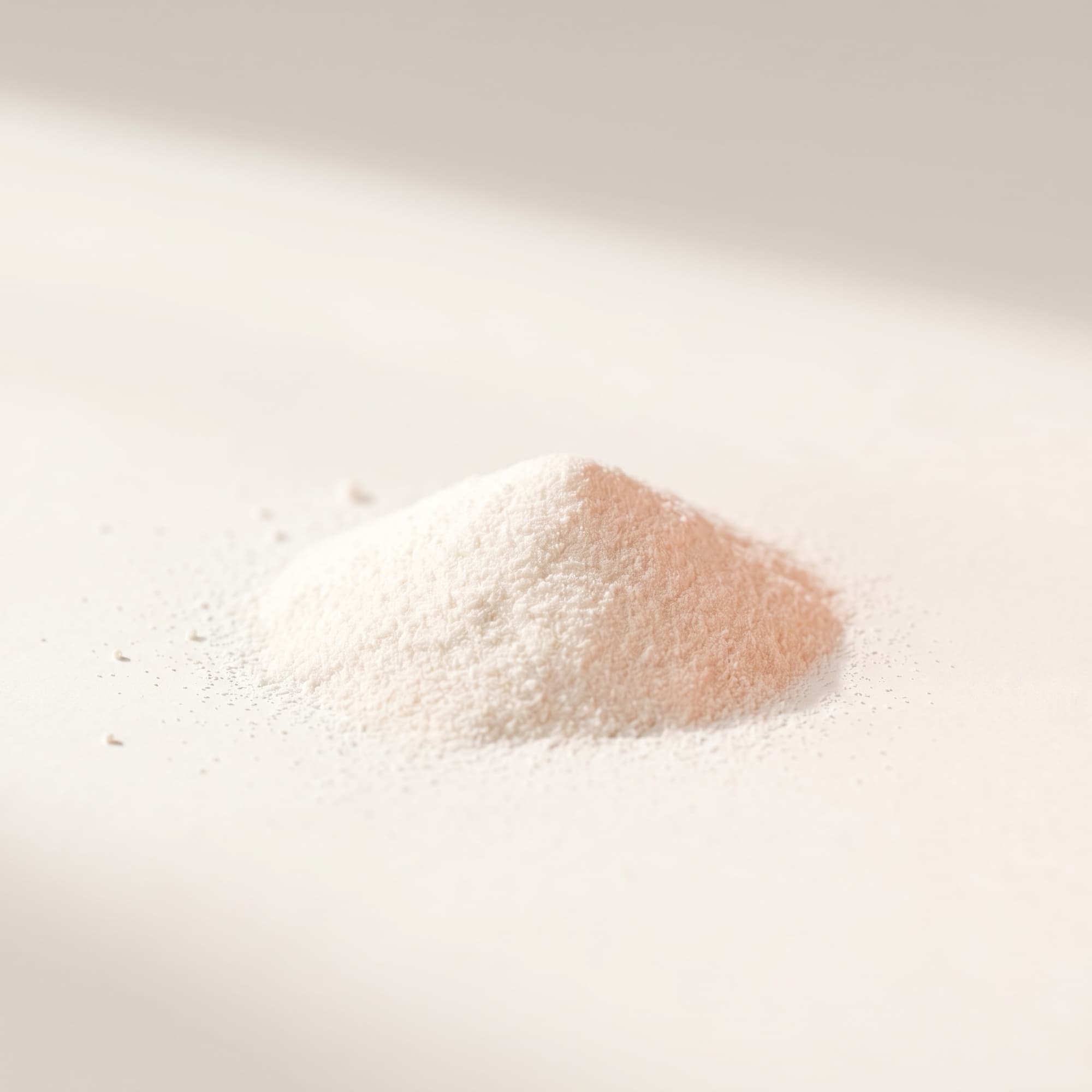
No. Pure hydrolysed marine collagen has no taste or smell of its own; a fishy note comes from less well purified raw material. Our powder contains no aroma or flavouring that would have to mask one, so in water you mostly notice that the drink thickens very slightly.
Does it dissolve fully, or are there lumps?
It dissolves fully. Stir a sachet into 200 ml of cold or lukewarm water and let it stand for a few seconds. No shaker or blender needed. If lumps do stay in the cup, it usually means the powder went onto the surface too quickly.
On an empty stomach, or with food?
Best in the morning on an empty stomach, roughly 30 minutes before breakfast, when digestion is free and the peptides are not competing with other proteins. With food works too, and that beats skipping a dose over timing. Consistency matters far more than the hour.
Can I combine it with other supplements?
Yes. Collagen is amino acids, so it does not clash with everyday supplements. With vitamin C it is actively complementary, since that is a cofactor in your body making its own collagen. Omega 3, magnesium or vitamin D can be taken alongside. If you take medication, ask your doctor.
Is it suitable past forty and through menopause?
That is the most common reason women start. The body’s own collagen production falls with age, and the decline speeds up around menopause. A food supplement replaces neither treatment nor a doctor’s advice, but as a daily routine this is the most common situation people begin collagen in.
Will I tolerate it with a sensitive gut?
Usually yes. The dose contains nothing but collagen: no fillers, sweeteners, colourings, lactose or gluten. If you are being treated for inflammatory bowel disease or are in an active flare, though, speak to your doctor first and start with half a sachet a day.
Pair with
What pairs well

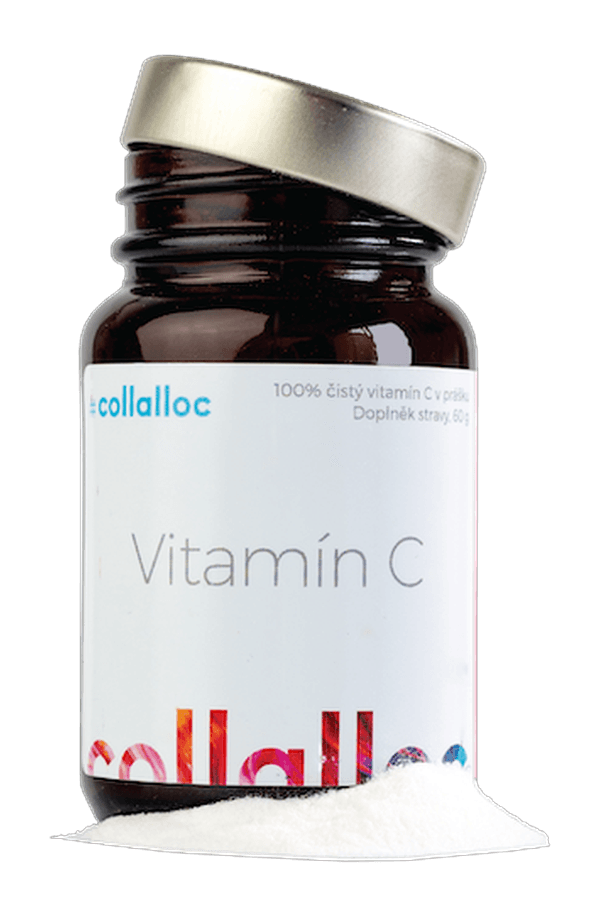
Vitamin C18×So your collagen does the whole job, not half. A 60-day course.

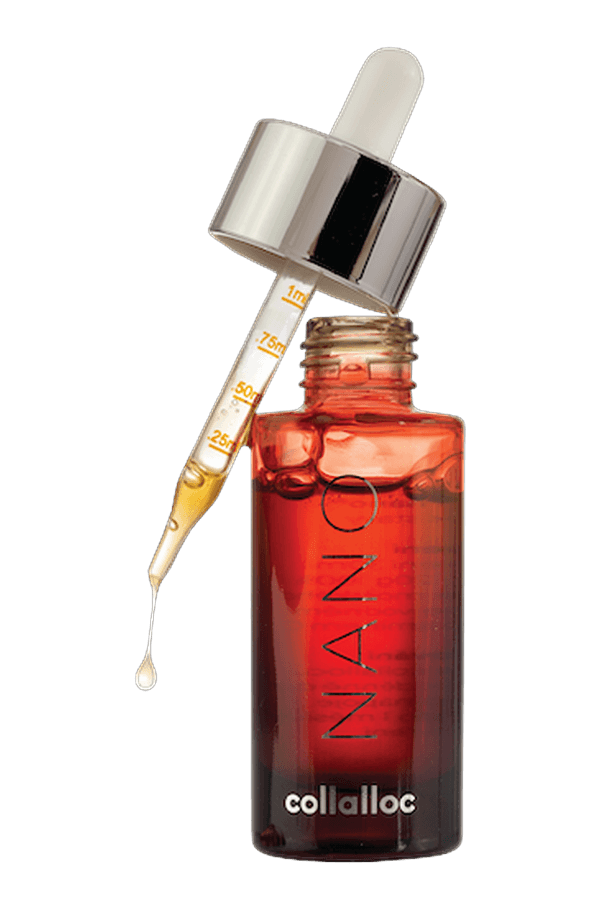
NANO 2.095×Firmer skin even when life is busy. Squeeze, swallow, carry on.

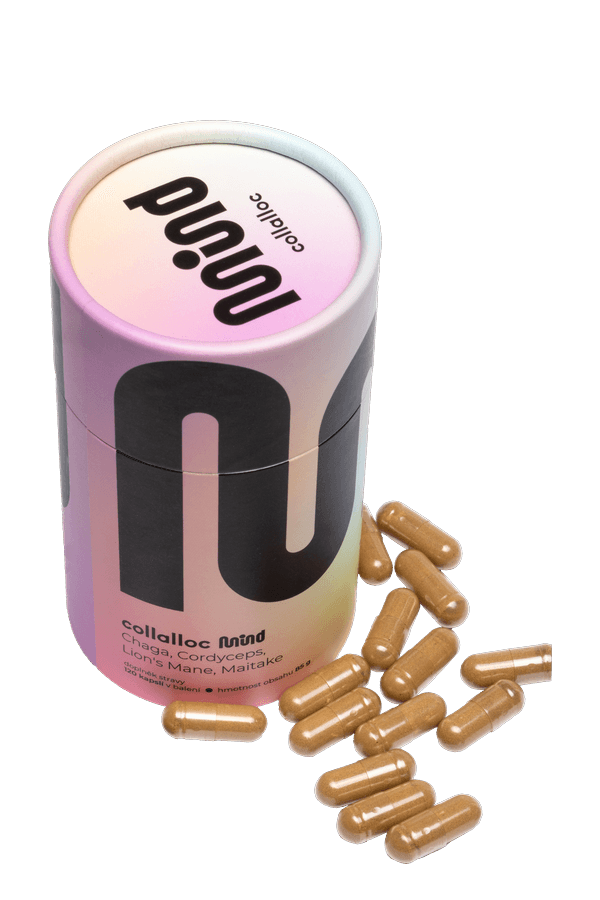
MIND32×Calm energy and a clear head for demanding days. Caffeine-free.