MagazineForms of collagen: powder, capsules, drink. Which works better?
Forms of collagen: powder, capsules, drink. Which works better?
Collagen exists in a handful of forms: powder, capsules, drink in a sachet, gummies. Each one has its marketing. When you look at the hard data, however, the picture settles into a simple conclusion: what matters above all is the dose and the quality of the peptides, not the packaging.
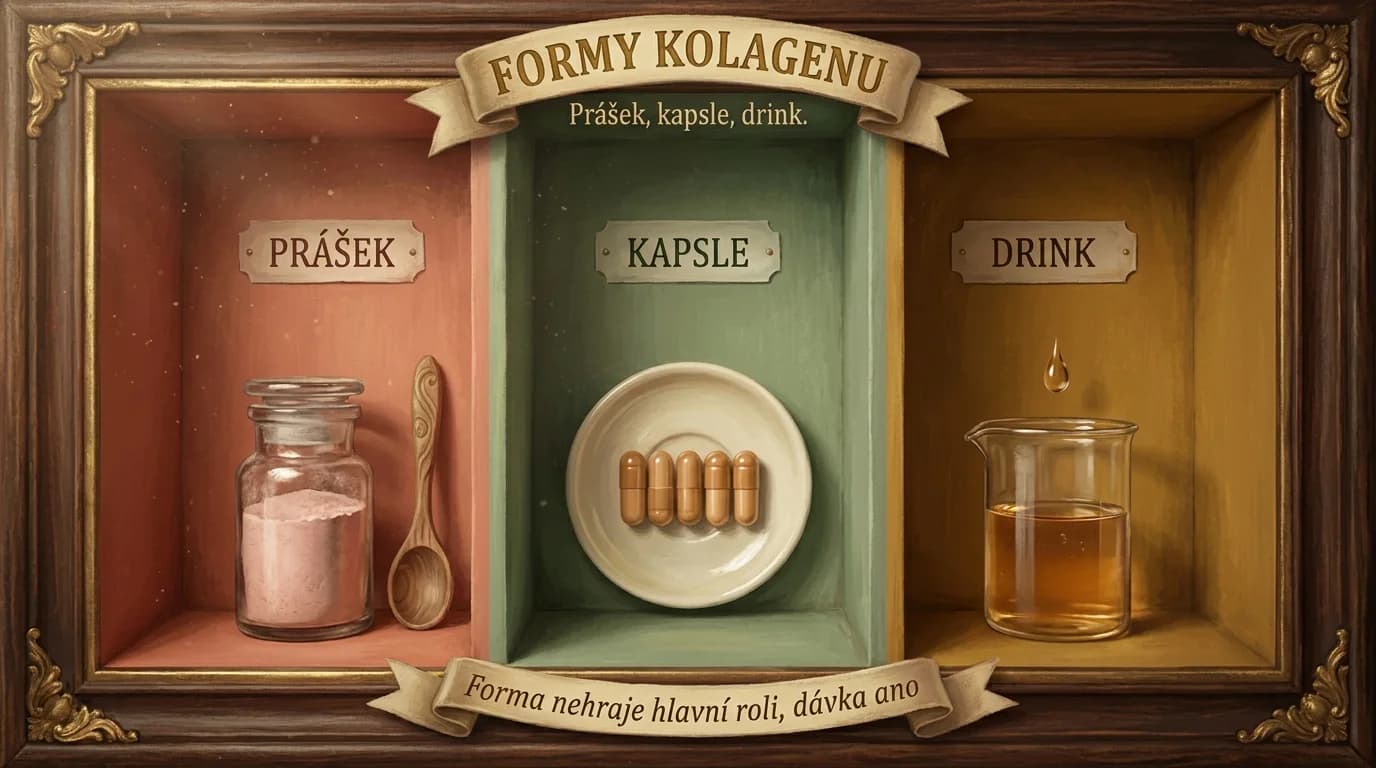
Powder (loose peptides to mix in)
The most common form on the market. The powder is stirred into a liquid and drunk.
Advantages: flexible dosing, typically the highest concentration of pure collagen per serving, no capsules or gummies.
Disadvantages: flavours can mask the quality of the raw material, some products contain fillers or sweeteners.
What to watch for: how many mg of pure collagen (not “blend”) in one serving.
Capsules
Practical, no flavour, easy to take on the move. Capsules, however, have a physical limitation. A standard capsule holds roughly 500 to 800 mg of content. For a 3,300 mg dose, you therefore need roughly 4 to 7 capsules a day. Customers often do not stick with that.
Bioavailability itself is less of a problem: capsules protect the contents from saliva, but passage through the stomach is the same as for powder. Capsules suit as a supplement (for example, for specific peptides such as Type II for joints), not as the primary form for a full daily dose of collagen.
Ready-to-drink (sachets, bottles)
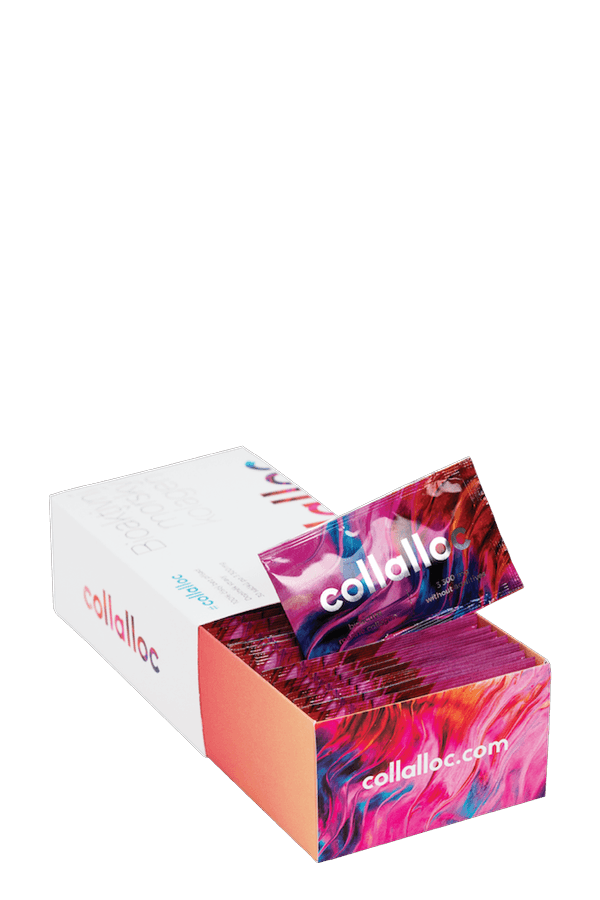
Most popular among beginners. Sachets are convenient, they taste good, and beginners do not forget to take them.
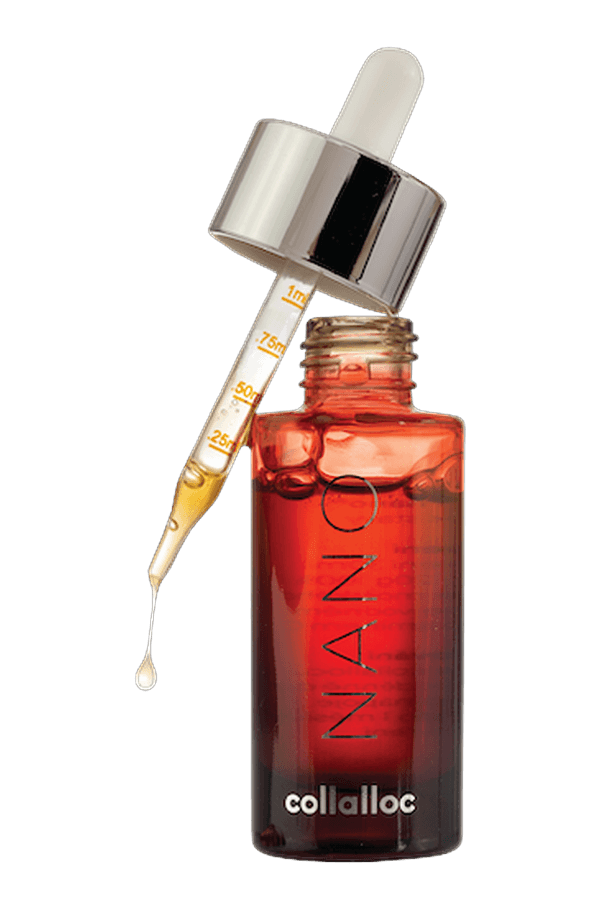
Disadvantages: higher cost per gram of pure collagen, plenty of added sweeteners, preservatives, and flavours. Some premium versions are an exception.
What decides the result
Form does not play as large a role as marketing suggests. The decisive factors are:
- Dose: a sufficient serving of well-absorbed collagen (collalloc delivers 3,300 mg per sachet at 95% absorption)
- Molecular weight: ideally below 500 Da for maximum absorption
- Type of collagen: Type I for skin, hair, nails; Type II for joints
- Consistency: at least 60 days. Shorter courses do not give the body enough time.
- Vitamin C: cofactor for the hydroxylation of proline. Without it, collagen synthesis stalls.
Conclusion
Choose the form that fits your lifestyle. The one you will actually take every day. The best form is the one that does not end up in a drawer.