MagazineLion's Mane
Lion's Mane
Lion's Mane: what this functional mushroom can do and why the most productive people are taking it.
Your focus is slipping. By the afternoon your brain runs at half capacity. And yet you feel you have done almost nothing of what you planned in the morning. Does that sound familiar?
There is a mushroom, and no, it has nothing to do with the ones you pick in the woods, that changes the way your brain works. It is called Hericium erinaceus, but the whole world knows it as Lion's Mane. And we have it in collalloc MIND.
In this article we will tell you everything you need to know about Lion's Mane: how it works, what science says, how to dose it properly and who it suits best.
What is Lion's Mane?
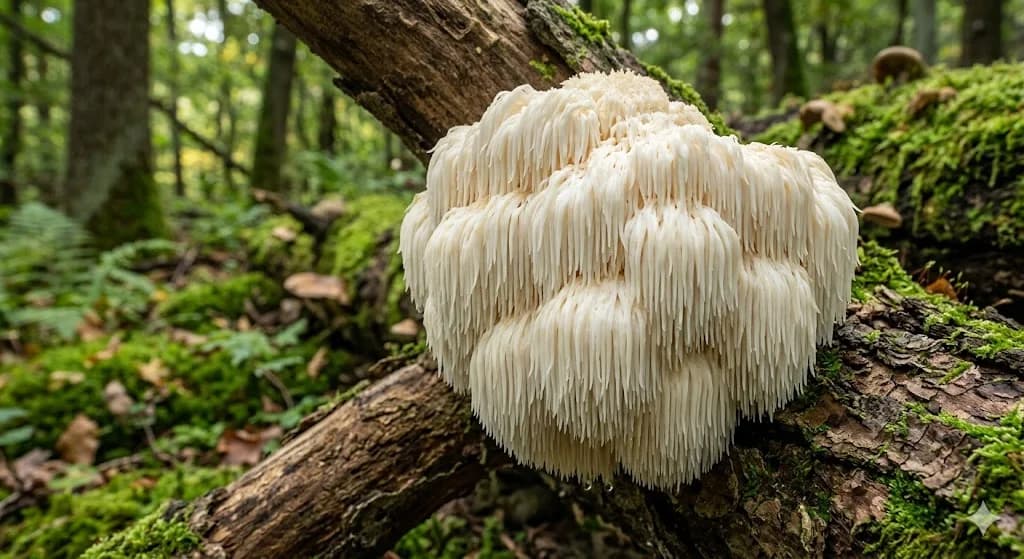
Lion's Mane (Latin Hericium erinaceus) is an edible medicinal mushroom originally from Asia. It grows on the trunks of deciduous trees and at first glance looks like a white tuft of needles, hence the name. In traditional Chinese and Japanese medicine it has been used for centuries to support cognitive health and the nervous system.
Today Lion's Mane is classed among so-called nootropics, substances that support brain function. And unlike many trendy supplements, it has solid scientific grounding.
How does Lion's Mane act on the brain?
The key lies in unique compounds called hericenones and erinacines. These bioactive substances stimulate the formation of NGF, Nerve Growth Factor.
NGF is a protein essential for the growth, maintenance and renewal of nerve cells. Put simply: the higher the NGF level, the better the brain works, learns and remembers.
A study published in Phytotherapy Research (2009) showed that in older adults who took a Lion's Mane extract for 16 weeks, there was a statistically significant improvement in cognitive performance compared with a placebo group. After discontinuation the results were gradually lost, suggesting the effect is real, not placebo.
Main benefits of Lion's Mane, what research says
- Focus and working memory: Lion's Mane helps maintain attention and process information faster. That is why it is especially popular with students and those working in creative and analytical fields.
- Nervous-system protection: NGF protects neurons from damage. Research suggests potential in the prevention of neurodegenerative diseases, although more research is needed here.
- Reducing anxiety and depression: Smaller studies suggest Lion's Mane can mildly reduce symptoms of anxiety and depression, probably via anti-inflammatory mechanisms.
- Supporting nerve regeneration: Erinacines may support the renewal of the myelin sheath around nerves, which is key for the speed of nerve conduction.
- Immunity: Polysaccharides in Lion's Mane modulate the immune system, especially macrophage activity.
Who is Lion's Mane most suitable for?
Lion's Mane is not just for biohackers or performance managers. It suits anyone who wants to support their brain in a natural way:
- People in demanding cognitive professions (IT, managers, lawyers, doctors)
- Students during exam periods
- People 40+ who feel brain fog or a drop in focus
- Athletes who want to support neuromuscular coordination
- Anyone dealing with chronic stress
How to dose Lion's Mane?
The standard recommended dose of Lion's Mane extract ranges from 500 to 1,000 mg per day. Studies showing cognitive benefits most often used 3 × 250 mg (750 mg total) a day.
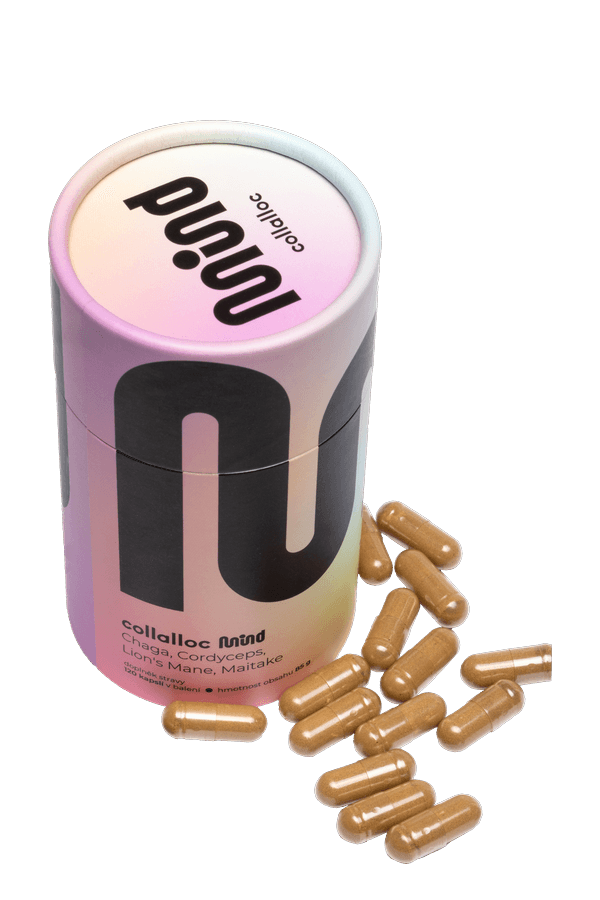
In collalloc MIND, Lion's Mane is standardised for the optimal content of bioactive substances and combined with three other functional mushrooms: Chaga, Cordyceps and Maitake. Each adds a unique dimension; the result is a synergistic complex for mental performance, immunity and physical recovery.
When to take it? Ideally in the morning or before demanding work. Lion's Mane is not a sedative, on the contrary, it can increase alertness.
Is Lion's Mane safe?
Yes. Lion's Mane has an excellent safety profile and is generally very well tolerated. Mild digestive discomfort can rarely occur, especially at higher doses. If you take medication or are pregnant/nursing, talk to your doctor first.
Frequently asked questions (FAQ)
How long does it take for Lion's Mane to work?
Most people feel the first effects after 2 to 4 weeks of regular use. For the full effect, at least 8 to 12 weeks is recommended.
Can Lion's Mane be combined with collagen?
Yes, it is the ideal combination. While collagen restores physical structures (skin, joints, hair), Lion's Mane works at the mental level. Collagen also contains glycine, which supports sleep quality, and good sleep is a condition for effective nootropic action.
Is there a difference between the whole mushroom and the extract?
A fundamental one. The extract has a significantly higher concentration of bioactive substances. collalloc MIND uses a standardised extract, not dried powder of the whole mushroom.
Want to try Lion's Mane together with collagen?
collalloc MIND combines Lion's Mane, Chaga, Cordyceps and Maitake in a single capsule. Combined with collalloc kolagen you get complete care, inside and out. → Try collalloc MIND