MagazineWhat is collagen? Introduction to the series
What is collagen? Introduction to the series
You may know collagen as an ingredient in your favourite cream, or you may have noticed a food supplement containing it on the vitamin shelf, or you have just heard something about it somewhere because there has been quite a bit of talk about it lately. But what really is this collagen...

You may know collagen as an ingredient in your favourite cream, or you may have noticed a food supplement containing it on the vitamin shelf, or you have just heard something about it somewhere because there has been quite a bit of talk about it lately. But what really is this collagen, how and what does it do, and how do you best bring it into your life? We will try to answer that for you with this specialist series.
PART I: 7 ways collagen can improve your health
Collagen is the most abundant protein in our body, and at present we know at least 27 different types of collagens. It is found in muscles, bones, skin, blood vessels, the digestive tract and tendons. It gives your skin firmness and elasticity, helps with the replacement of dead cells. In the case of joints and tendons, it acts as „glue“ that holds the body together. It plays an important role in ageing.
Our body produces its own collagen, but its production naturally decreases and slows down with age. The body simply starts producing less of it, and we can thank that for the signs of ageing. We probably first notice forming wrinkles and somewhat sagging skin, later joint pain due to cartilage loss. Other lifestyle factors also contribute to depleting collagen levels in the body, such as a high-sugar diet, smoking or heavy sun exposure. Diseases related to collagen deficiency in the body most often arise from a combination of genetic disorders, poor intake of collagen-containing foods, nutritional deficiencies and digestive issues that affect collagen production.
Fortunately collagen can be consumed in the form of foods containing large amounts of protein or food supplements such as collalloc, which deliver collagen into your body. In the first part of our collagen series we will look at what all collagen is good for and how it can help you improve your health.
1) Improves skin health and aesthetic appearance
The older we are, the more collagen production drops. It is happening to you right now, as you read this article! First you notice the physical signs of this process: looser skin, more wrinkles, less elasticity. Raising collagen levels in the body will help your skin look firmer, increase its smoothness and help your skin cells maintain the pace of renewal and repair they need.
A specialist medical study examines the anti-ageing properties of collagen in women aged 35 to 55 over eight weeks. They take 2.5 to 5 g of collagen hydrolysate daily, and compared with the control placebo group the effects are striking. Significant improvements appear in skin elasticity, hydration and skin barrier function, measured via transepidermal water loss. And all that with no side effects. That makes collagen one of the best natural ingredients for skin care overall.
A particularly valued effect, especially from an aesthetic point of view, is the reduction of cellulite and stretch marks. When the skin loses elasticity due to lower collagen content, there is one side effect: more visible cellulite. Because the skin is thinner and no longer hides what is happening below the surface, cellulite becomes more pronounced. Improving skin elasticity with collagen therefore helps reduce that puckering.
2) Reduces joint pain and the risk of degeneration
Do you sometimes feel your legs creak and crackle, that things click and pop in them, that they feel stiff and getting them moving even hurts a little? That is your body telling you there is a collagen shortfall. When we have less collagen, our tendons and ligaments work with less elasticity and ease, which causes stiffness, swollen joints and other unpleasant symptoms.
Together with the gel-like, smooth substance that covers our bones and holds them together, collagen lets us move smoothly and pain-free. Think of collagen absorption like greasing a squeaky door hinge: it helps your joints move more easily, reduces pain and even lowers the risk of joint wear (1, 2). A recent study notes that collagen is effective even for treating osteoarthritis, joint pain and other musculoskeletal disorders.
Researchers at Harvard's Beth Israel Deaconess Medical Center in Boston, one of the most prestigious clinics in the world, found that collagen supplementation helped patients with rheumatoid arthritis find relief from painful symptoms by reducing swelling in tender joints. Another study, published in the International Journal of Medical Sciences, found that people with osteoarthritis joint pain treated with collagen show clear improvements in everyday activities, such as walking up or down stairs, sleep and overall quality of life (3).
3) Helps address leaky gut syndrome
If you suffer from leaky gut syndrome, where unhealthy or even toxic substances pass from your digestive tract into the bloodstream, collagen can be very beneficial. It helps break down proteins, soothes the intestinal lining, heals the damaged cell wall and supplies it with amino acids that heal it. The collagen molecule is made up mainly of the amino acids glycine, proline, arginine, glutamine, hydroxyproline and hydroxylysine, with the last two arising from post-translational modification of proline and lysine with the help of ascorbic acid, that is, vitamin C.
For the digestive tract, consuming collagen brings its greatest benefit to connective tissues by „sealing and healing“ the protective lining of the gastrointestinal tract. Today we know that many diseases can be caused by inflammation or irritation from an unhealthy or poorly functioning gut. Precisely poor gut health, including changes in microflora and the permeability of the intestinal lining, allows particles to pass into the bloodstream where they can trigger a cascade of inflammation and other problems.
Studies have shown that collagen application reduces inflammatory bowel disease. Because the amino acids in collagen build the tissue that lines the large intestine and digestive tract, collagen supplementation can help treat gastrointestinal symptoms and disorders including leaky gut syndrome, irritable bowel syndrome (IBS), problems with stomach-acid production, Crohn's disease and ulcerative colitis. Collagen also helps with water absorption in the intestines and the overall process of effectively eliminating unwanted things from the body.
4) Improves metabolism, supports muscle building, recovery and energy expenditure
Collagen has a positive impact on the speed of your metabolism. It adds muscle mass and helps with processing basic nutrients. One of the most important roles is played by the amino acid glycine. It helps create muscle tissue by converting glucose into the energy that fuels muscle cells. And do not forget that maintaining muscle mass is very important at any age, because it provides support, keeps bones healthy and burns more calories than fat. While taking collagen you can also take vitamin C to make sure your body can convert collagen into usable protein. Through this process you also kick-start renewal of your energy and vitality.
That is by no means everything glycine can do for your metabolism. Research shows that it plays an important role in the proper function of the digestive and central nervous systems, performing key tasks in keeping the body healthy and youthful. (4) It also helps slow the ageing process by improving the body's ability to process antioxidants, and the body also uses it in the process of building a healthy cell from DNA and RNA.
Another of the collagen amino acids, arginine, increases the body's ability to produce protein from other amino acids, which is important for muscle tissue healing, injury, tissue regeneration, improving metabolism and helping with proper growth and development.
Glutamine then helps maintain sufficient energy by facilitating the synthesis of many chemical substances. This amino acid provides „fuel“ for our cells, including carbon and nitrogen.
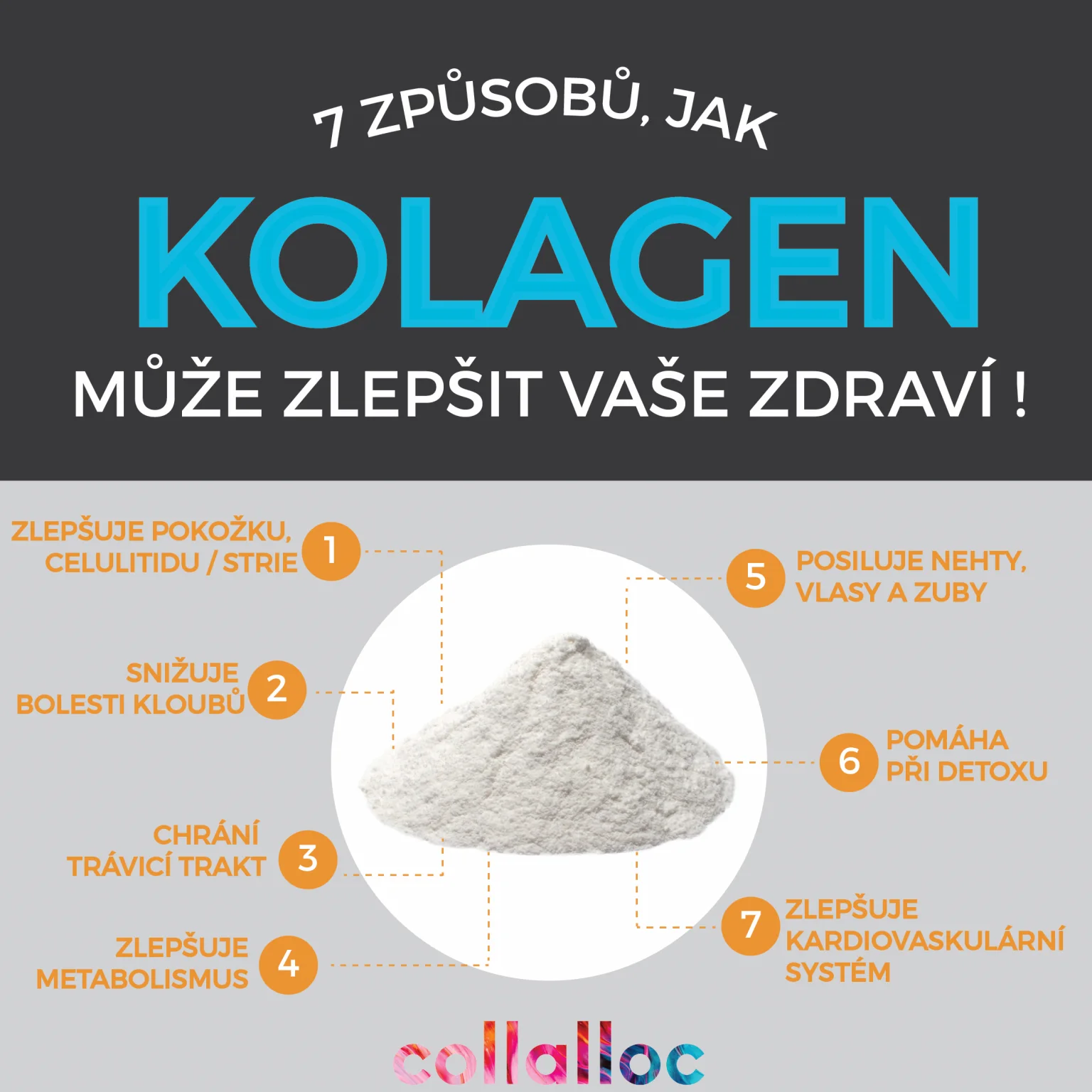
5) Strengthens nails, hair and teeth
Have you ever had brittle or split nails? Lack of collagen may be to blame. Collagen protein is a building block of your nails, hair and teeth. Adding collagen to your menu will help keep your nails and teeth strong, and stop hair loss.
A study published in the Journal of Investigative Dermatology explains that there is a significant relationship between the extracellular matrix and hair follicle regeneration. This suggests that collagen could potentially be used as a very strong therapeutic tool against hair loss and skin diseases.
6) Improves liver function
If you are looking for a way to detoxify your body from harmful substances, improve blood flow and keep your heart healthy, collagen will be extremely useful. Glycine helps minimise damage to your liver when it absorbs foreign substances, toxins or alcohol. (5)
7) Keeps the cardiovascular system healthy
The amino acid proline helps the walls of arteries release fat that builds up in the bloodstream, reduces fat in arteries and minimises its deposit. It is therefore an effective fighter against higher blood cholesterol levels.
Proline is also important for the renewal of tissues in joints and arteries, and helps control blood pressure. In joints it acts as a shock absorber for vibration and impact, helping to keep cartilage healthy and functional even as we age. (6) It is also associated with the prevention of arterial hardening, since it helps protect our arteries from dangerous plaque build-up.
Beyond that, arginine helps with the production of nitric oxide, which in effect means enabling better blood circulation by widening arteries and relaxing muscle cells and blood vessels.
We are glad if the topic interests you and you have read this far. In the next part of our series we will look together at the types of collagen we deliberately set aside in this article for the sake of simplicity and easier understanding. We will also cover sources of collagen, with details on bovine, chicken and especially fish collagen. If you have any questions and want to know more, do not hesitate to contact us by email at collalloc@collalloc.com.
2017 Powered by collalloc