MagazineFunctional mushrooms and immunity: what beta-glucans do
Functional mushrooms and immunity: what beta-glucans do
Mushrooms boost immunity, this sentence is repeated everywhere. But the mechanism is more specific and more interesting than the marketing suggests.
What beta-glucans are and why they matter
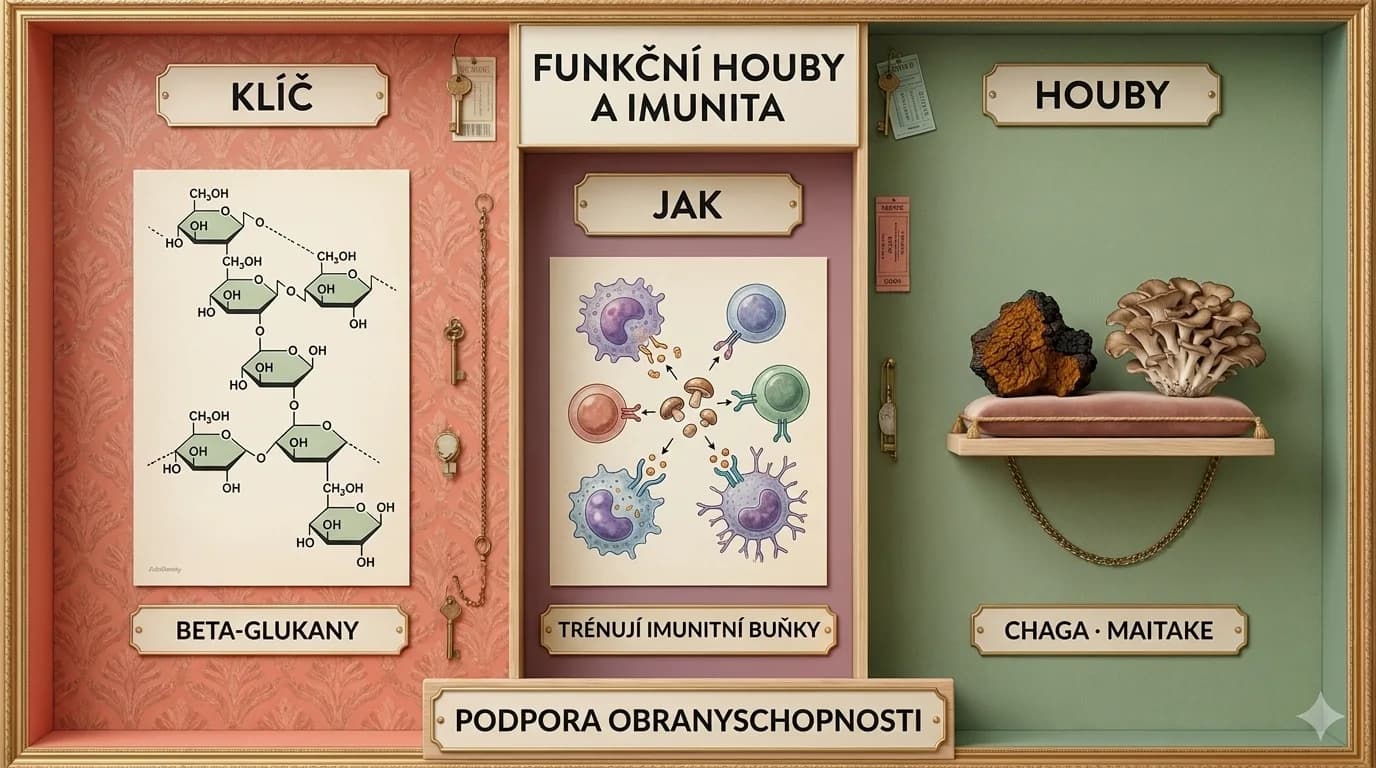
Beta-glucans are polysaccharides, long chains of sugars found in the cell walls of functional mushrooms. They are not a vitamin or a mineral. They are structural fibers with a specific biological effect: they interact with the receptors of immune cells.
The key receptor is called Dectin-1 and sits on macrophages and dendritic cells, which are part of the innate immune system. A 2024 study (International Journal of Medicinal Mushrooms) confirmed that beta-glucans from Cordyceps militaris activate exactly this Dectin-1 signaling pathway. The mechanism was consistent across different species of mushrooms.
Trained immunity: immunological memory without a vaccine
Research published in the journal Frontiers in Nutrition (2024) showed that beta-glucans from mushrooms can trigger so-called trained immunity, an immunological memory of innate immune cells. Macrophages “remember” contact with beta-glucans and respond to future stimuli faster and more efficiently.
This finding is scientifically interesting: the innate immune system was long considered “blind,” without memory, purely reactive. Beta-glucans call that assumption into question.
Which mushroom contains the most beta-glucans?
- Turkey Tail (Trametes versicolor): according to chemical analysis it contains up to 60.79 % beta-glucans, the highest content among commercially available mushrooms.
- Maitake (Grifola frondosa): its beta-glucan D-fraction is one of the best-researched mushroom immunomodulators. It activates macrophages, NK cells (natural killer cells) and dendritic cells of the innate immune system, and its effect on glucose metabolism is being studied as well.
- Lion’s Mane and Cordyceps: both contain beta-1,3 and beta-1,6 glucans with immunomodulatory and antitumor effects.
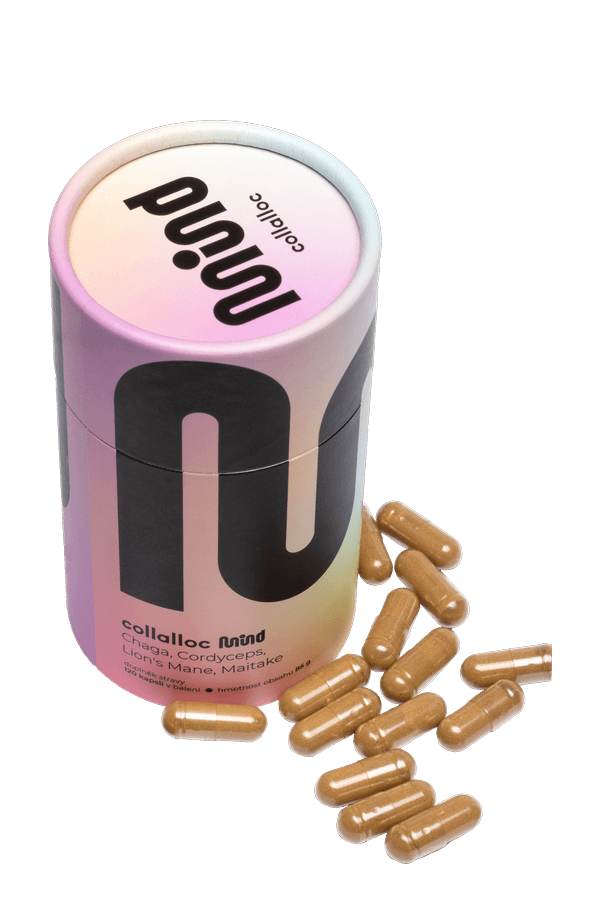
collalloc MIND combines Lion’s Mane, Cordyceps, Chaga and Maitake, so you get the beta-glucan immune component (Maitake) and antioxidant support (Chaga) right inside it. Adding Turkey Tail to your routine makes sense for targeted immune reinforcement. How to combine mushrooms is covered in the guide to stacking.
“Beta-glucans are not immune stimulants. They are training coaches, they teach immune cells how to respond better. And the effect accumulates.”
What it means for you in practice
- The immune effect is not immediate. Clinical studies measure results after 4 to 12 weeks, not after 3 days.
- Product quality is crucial. Beta-glucans are in the fruiting bodies, not in mycelium grown on grain. Check what the product states on its label.
- Mushrooms are not antibiotics. They do not treat acute infections. They are prevention and long-term modulation, not a fast crisis intervention.
Frequently asked questions
How do functional mushrooms boost immunity?
Through beta-glucans, polysaccharides from cell walls that activate the Dectin-1 receptor on immune cells and can trigger trained immunity, that is, an immunological memory of the innate immune system.
Which mushroom has the most beta-glucans?
Turkey Tail, with a content of up to 60.79 %. Maitake has one of the best-researched beta-glucan fractions (the D-fraction), and Lion’s Mane and Cordyceps contain beta-1,3 and beta-1,6 glucans.
Do functional mushrooms treat infections?
No. Mushrooms are not antibiotics and do not treat acute infections. They act as long-term immune modulation and prevention, and the effect is measured in weeks.