MagazineHow to take collagen for maximum absorption?
How to take collagen for maximum absorption?
Collagen in the sachet is only half the equation. The other half is how and when you take it. What matters is molecular weight, consistency and vitamin C, not the exact hour.

First things first: what actually matters
Before timing and form comes one more fundamental thing: molecular weight. Hydrolysed collagen below 500 Da is absorbed as a bioactive peptide. It passes the intestinal barrier and reaches the bloodstream. Collagen above 1,000 Da is digested like ordinary protein and the signal to fibroblasts is minimal. Form, taste and packaging change none of this.
Timing: morning, evening or any time?
The scientific studies that tested the effect of collagen peptides on skin, joints and elasticity did not prescribe a specific time of day. They tracked consistency only. So collagen does not have to be taken at a specific hour. Even so, two approaches have biological grounding.
In the morning on an empty stomach, peptides absorb without competition from other dietary proteins, and some users report better subjective tolerance. In the evening before sleep, the body produces collagen mainly at night during deep sleep, when growth hormone secretion rises. An evening dose can supply building material exactly when the body actively uses it.
Both are correct. The key word is every day, not the right time.
What to combine collagen with
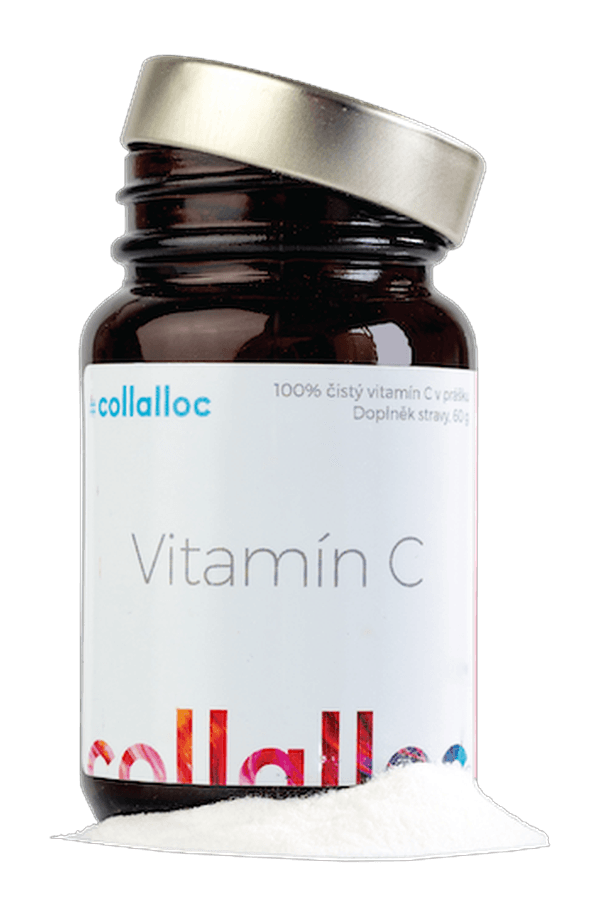
Vitamin C is a mandatory cofactor. Collagen synthesis needs it to convert proline into hydroxyproline, a key step in building the collagen fibre. Without enough vitamin C, peptides signal but the body has no tool to build. A collagen sachet is therefore worth combining with vitamin C, or adding to citrus juice.
Zinc and copper take part in the enzymatic processes of collagen synthesis and you find them in an ordinary varied diet: meat, legumes, nuts, seeds.
Drink temperature. Add collagen to a drink up to 60 °C. Around this temperature proteins begin to denature, so let boiling coffee or tea cool down first. Irreversible breakdown of the peptides does not happen until around 150 °C, but we keep the 60 °C limit as a safe margin so the quality of the peptides stays intact.
What lowers absorption instead
Sugar and alcohol. Glycation, the binding of sugar to collagen fibres, is one of the main mechanisms of their damage. Alcohol also disrupts amino acid absorption in the gut.
Smoking reduces blood flow through the skin and introduces substances that directly damage collagen fibres.
Chronic stress. Cortisol, the main stress hormone, lowers collagen production. The Harvard School of Public Health lists chronically high cortisol as a direct factor in collagen loss.
Collagen will not work a miracle if the other factors work against it. With the right routine, though, it is one of the best supported supplements on the market.