MagazineWeight loss with GLP-1 and skin: what research says about marine collagen
Weight loss with GLP-1 and skin: what research says about marine collagen
Losing weight on GLP-1 (semaglutide): why the face changes, what research says on collagen for weight loss and skin, what not to expect. Doctors decide on medicines.

Short answer: during rapid weight loss, including with GLP-1 medicines such as semaglutide, fat under the skin disappears faster than the skin can adapt: in a small study of 20 patients, the middle part of the face lost roughly 7% of its volume for every 10 kg of body weight (Sharma et al., 2025). Marine collagen will not bring this fat back, and we found no study that tested it in people on GLP-1. In placebo-controlled studies, mostly in women, collagen peptides came out better than placebo for skin hydration and elasticity (de Miranda et al., 2021), but studies without funding from pharmaceutical companies did not measure any improvement (Myung and Park, 2025). Collagen is not a weight loss product, and your doctor decides on food and supplements while you take medicines.
What GLP-1 medicines are
GLP-1 is a hormone produced in the intestine after eating that helps control blood sugar levels and the feeling of fullness. Medicines from the group of GLP-1 receptor agonists, such as semaglutide or liraglutide, mimic its action: they slow down stomach emptying and dampen appetite. In studies, they reduced body weight by 5 to 18% (Mozaffarian et al., 2025).
This article is not a guide to medicines. Whether, how and for how long to take them is a matter for a doctor who knows your health. We are only interested in what happens to the skin during rapid weight loss and what research knows about it.
What rapid weight loss does to the skin
Skin is like fabric stretched over a frame. As long as there is volume underneath, it holds its shape. When the volume disappears quickly, the skin needs time to adapt, and during rapid weight loss it often does not get it.
- Fat under the skin disappears. In the face, it gave the cheeks their volume. In a retrospective study of 20 patients on GLP-1 medicines who lost an average of 11 kg over an average of 321 days, the middle part of the face lost a median of 9% of its volume, mainly in the superficial fat pads (Sharma et al., 2025). The name “Ozempic face” has caught on for this.
- Collagen and elastin renew slowly. These fibres give the skin firmness and elasticity, and their production naturally declines with age. Rapid loss of volume makes this difference visible.
This applies to any rapid weight loss, after a strict diet as well as after bariatric surgery. GLP-1 medicines have simply made rapid weight loss available to many more people.
Do GLP-1 medicines directly affect collagen in the skin?
A review by Greek dermatologists and endocrinologists summarises the possible mechanisms (Paschou et al., 2025). According to the review, GLP-1 receptors are also found on stem cells of fat tissue and on fibroblasts, the cells that make collagen in the skin. According to the authors, stimulating them reduces the production of protective signalling substances, which can lead to oxidative damage to fibroblasts, and indirectly also the production of oestrogens in subcutaneous fat, which fibroblasts need as a signal to make collagen.
What matters is how strong this evidence is. The authors themselves write about possible mechanisms that still need to be clarified, and point out that the same medicines reduce inflammation throughout the body and may even benefit the skin. A newer review adds that direct effects of GLP-1 medicines on skin cells are so far known only from laboratory experiments and animal experiments and need to be interpreted with caution (Karlin et al., 2026).
Less food also means less protein and fewer nutrients
GLP-1 medicines work by making people eat less. Smaller portions, however, also mean less protein and fewer vitamins and minerals. A joint advisory from four American professional societies therefore lists nutrient deficiencies due to lower energy intake and loss of muscle mass among the main pitfalls of these medicines, and recommends keeping an eye on nutrition, strength training and working with a dietitian (Mozaffarian et al., 2025).
A review from 2026 reports that roughly 22% of patients had at least one documented nutrient deficiency within a year of starting the medicines (Karlin et al., 2026). The authors also write that only future studies will show whether correcting these deficiencies improves the appearance of the skin.
Collagen will not close this gap. It is a protein, but an incomplete one: it lacks the essential amino acid tryptophan, so it cannot replace meat, fish, eggs, dairy products or pulses (Paul et al., 2019). How much protein and which supplements you need while taking the medicines is something your doctor or a dietitian should discuss with you.
What happens to collagen peptides in the body
A common objection goes: collagen is broken down in the stomach and intestine like any other protein. Largely yes, but not completely. Japanese researchers measured the blood of volunteers who had drunk 9.4 to 23 g of gelatin hydrolysate. In the blood, they found short collagen peptides, mainly prolyl-hydroxyproline (Pro-Hyp). Their levels were highest after 1 to 2 hours and had fallen by half after 4 hours (Iwai et al., 2005). This was gelatin from land animals, not from fish.
That peptides reach the blood does not yet mean they do anything specific in the skin. Only placebo-controlled studies in people can establish that, and we write about them below. We write about collagen absorption in more detail in the article Is the collagen I drink absorbed?
What studies of collagen and skin have shown
A meta-analysis of 19 randomised, double-blind studies with 1,125 participants aged 20 to 70, almost exclusively women, came out in favour of hydrolysed collagen over placebo on three measures: skin hydration, elasticity and wrinkles (de Miranda et al., 2021).
An example from this area: 64 people took 1,000 mg of a low-molecular-weight collagen peptide a day for 12 weeks, or a placebo. Skin hydration was higher in the collagen group after 6 and 12 weeks, and wrinkles improved compared with placebo after 12 weeks (Kim et al., 2018). We found no study that tested collagen specifically in people losing weight with GLP-1 medicines.
Where the dispute lies and why we tell you about it
In 2025, a meta-analysis of 23 randomised studies with 1,474 participants was published. Overall, it found improvements in hydration, elasticity and wrinkles. But when the authors split the studies by funding, the effect appeared only in studies paid for by pharmaceutical companies, not in the others. Even the high-quality studies did not measure any significant effect, and the authors conclude that evidence for using collagen against skin ageing is still lacking (Myung and Park, 2025).
We are telling you this because we sell collagen and do not want you to hear it from someone else. In short: that collagen peptides reach the blood has been measured. The results for skin are mixed, and there is little independent data. Anyone who promises you certainty on this is exaggerating.
Collagen and vitamin C
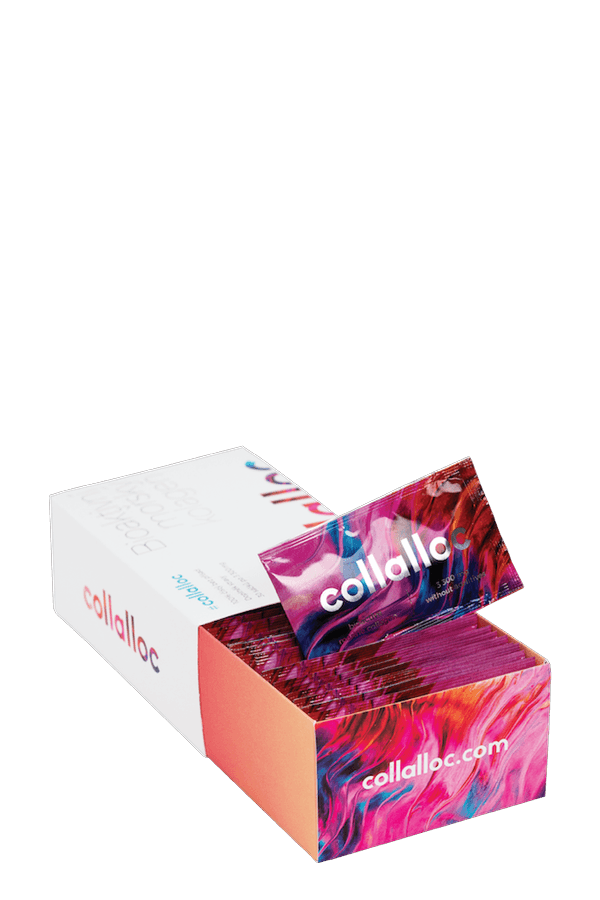
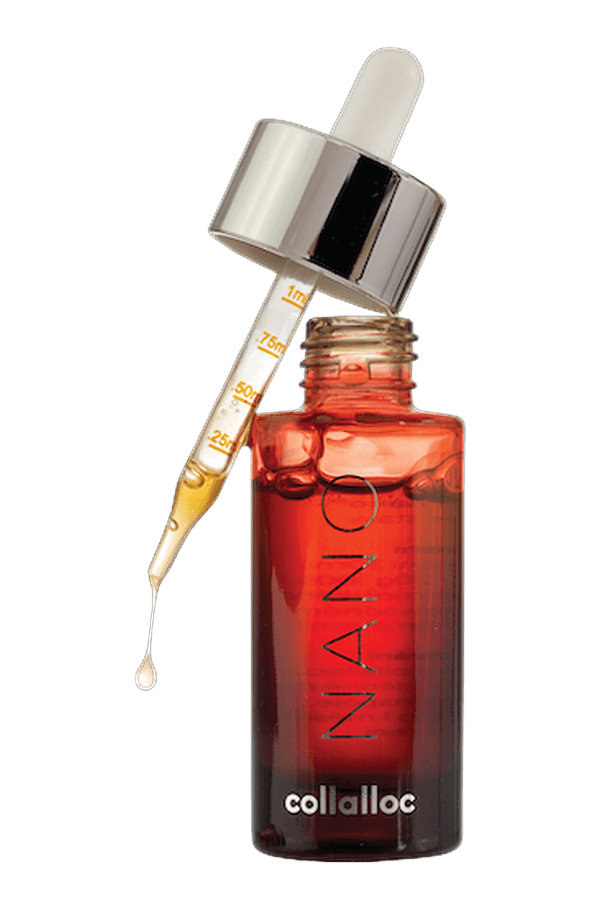
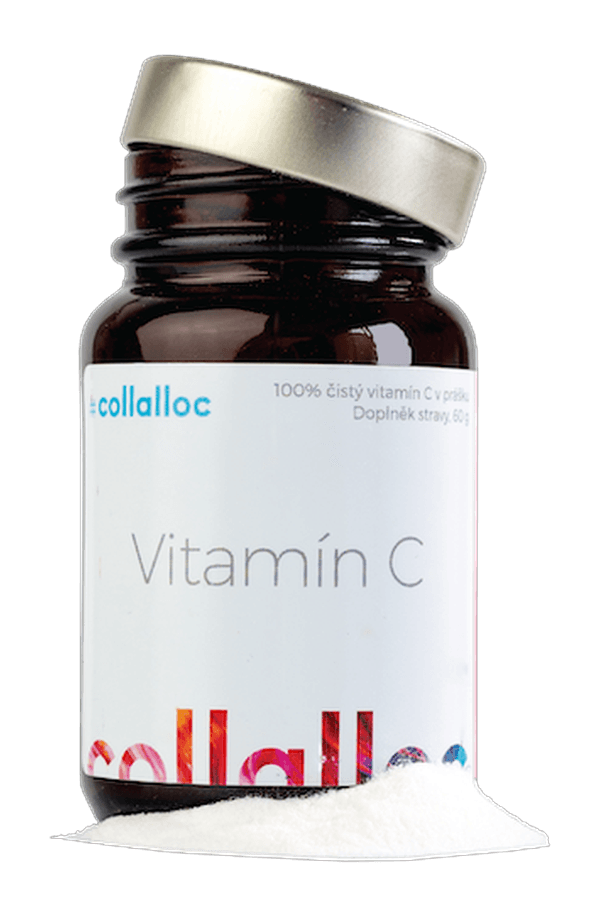
Vitamin C contributes to normal collagen formation for the normal function of skin. It is contained in the liquid collalloc NANO 2.0: 1 ml contains 700 mg of marine collagen and 80 mg of vitamin C. collalloc Vitamin C is available separately. The collalloc kolagen sachets do not contain vitamin C.
Practical notes when you are losing weight
- Dose. Doses varied in the studies, for example 1,000 mg a day (Kim et al., 2018). One sachet of collalloc kolagen contains 3,300 mg of marine collagen with molecules of around 500 Da and 95% absorbability, NANO 2.0 700 mg in 1 ml. Stick to the dose on the pack.
- Duration. Studies assessed the skin after 6 to 12 weeks. An earlier assessment is not backed by research, and the result is not guaranteed.
- Temperature. Stir collagen into a cold or lukewarm drink, at 60 °C at most.
- Protein overall. Collagen is a supplement, not a replacement for protein from food. Discuss how to eat while taking GLP-1 medicines with your doctor or a dietitian. The most common mistakes, including the question of whether collagen makes you gain weight, are summarised in the article What to avoid when taking collagen.
- Exercise and sun. The expert advisory on GLP-1 medicines includes strength training (Mozaffarian et al., 2025). Protect your skin from the sun, as UV radiation breaks down collagen in the skin.
What collagen will not do
Collagen will not bring back the fat under the skin that has been lost from the face, will not prevent loose skin, and will not override genetics, age, the starting condition of the skin or the speed and extent of weight loss. Nor is it a weight loss product, and we attribute nothing of the kind to it. For marked excess skin after major weight loss, the right route is a dermatologist or plastic surgeon, not a food supplement.
If you take weight loss medicines, discuss every change to your diet and supplements with the doctor who prescribed them. What research shows so far about collagen and skin is clearly summarised on our page Collagen for skin.
Frequently asked questions
Will collagen help with so-called Ozempic face?
Hollow cheeks during rapid weight loss are caused mainly by the loss of fat under the skin, in a small study roughly 7% of the volume of the middle part of the face for every 10 kg of body weight (Sharma et al., 2025). A food supplement will not bring that back. No study we found has examined collagen in people on GLP-1 medicines, and in other people the results for skin are mixed (Myung and Park, 2025).
How much collagen should I take a day while losing weight?
Skin studies used different doses, for example 1,000 mg of a low-molecular-weight peptide a day for 12 weeks (Kim et al., 2018). Stick to the dose on the pack: one sachet of collalloc kolagen contains 3,300 mg, NANO 2.0 700 mg of collagen and 80 mg of vitamin C in 1 ml. If you take GLP-1 medicines, discuss supplements with your doctor.
After how long can I assess the result?
In a study of 64 people, skin hydration was higher than with placebo after 6 weeks, and wrinkles improved after 12 weeks (Kim et al., 2018). An earlier assessment is not backed by research. The result is not guaranteed, though: studies without funding from pharmaceutical companies did not measure any improvement (Myung and Park, 2025).
Why marine collagen in particular?
Marine collagen is made from fish and contains mainly type I collagen. We found no study that directly compared marine and bovine collagen for skin, so we do not claim that marine is better. Collagen peptides were also measured in the blood after gelatin from land animals (Iwai et al., 2005). collalloc uses collagen from North Sea fish hydrolysed to around 500 Da, which is not suitable if you have a fish allergy.
Will collagen replace protein in my diet when dieting?
No. Collagen lacks the essential amino acid tryptophan, so it is not a complete protein (Paul et al., 2019). See it only as a supplement alongside the usual protein from food, not instead of it.
Does collagen help with weight loss?
No. Collagen is not a weight loss product. One sachet of collalloc kolagen contains 3.3 g of protein, but collagen lacks tryptophan and will not replace complete protein (Paul et al., 2019). If you are losing weight with GLP-1 medicines, discuss supplements with your doctor.
Sources
- Radiographic Midfacial Volume Changes in Patients on GLP-1 Agonists Sharma R. K., Vittetoe K. L., Barna A. J., Takkouche S., Varelas A. N., Yang S. F., Otolaryngology: Head and Neck Surgery, 2025
- GLP-1RA and the possible skin aging Paschou I. A., Sali E., Paschou S. A., Tsamis K. I., Peppa M., Psaltopoulou T., Endocrine, 2025
- The Impact of Glucagon-Like Peptide-1 Receptor Agonist-Induced Nutritional Deficiencies on Skin Health: A Narrative Review With a Proposed Framework for the Aesthetic Practitioner Karlin J., Li Z., Parsa K., Aesthetic Surgery Journal Open Forum, 2026
- Nutritional priorities to support GLP-1 therapy for obesity: a joint Advisory from the American College of Lifestyle Medicine, the American Society for Nutrition, the Obesity Medicine Association, and The Obesity Society Mozaffarian D., Agarwal M., Aggarwal M., Alexander L., Apovian C. M., Bindlish S., The American Journal of Clinical Nutrition, 2025
- Identification of food-derived collagen peptides in human blood after oral ingestion of gelatin hydrolysates Iwai K., Hasegawa T., Taguchi Y., Morimatsu F., Sato K., Nakamura Y., Journal of Agricultural and Food Chemistry, 2005
- Effects of hydrolyzed collagen supplementation on skin aging: a systematic review and meta-analysis de Miranda R. B., Weimer P., Rossi R. C., International Journal of Dermatology, 2021
- Oral Intake of Low-Molecular-Weight Collagen Peptide Improves Hydration, Elasticity, and Wrinkling in Human Skin: A Randomized, Double-Blind, Placebo-Controlled Study Kim D. U., Chung H. C., Choi J., Sakai Y., Lee B. Y., Nutrients, 2018
- Effects of Collagen Supplements on Skin Aging: A Systematic Review and Meta-Analysis of Randomized Controlled Trials Myung S. K., Park Y., The American Journal of Medicine, 2025
- Significant Amounts of Functional Collagen Peptides Can Be Incorporated in the Diet While Maintaining Indispensable Amino Acid Balance Paul C., Leser S., Oesser S., Nutrients, 2019