MagazineSpring skin reset: how to get your skin ready for sunny days
Spring skin reset: how to get your skin ready for sunny days
How to get your skin ready for sunny days: daily sunscreen in a thick enough layer, water, diet and sleep. And what studies really say about collagen for skin.
Short answer: what does the most for your skin before the sun is a sunscreen that you start using every day as early as spring. In a randomised trial of 903 adults under 55, no measurable increase in skin ageing was found over 4.5 years in the daily sunscreen group, and the changes were 24% smaller than in the group that used sunscreen at their own discretion (Hughes et al., 2013). On top of that, drink steadily, eat a varied diet and get enough sleep, though their effect on the skin is smaller and less well measured in studies (Akdeniz et al., 2018). Collagen as a food supplement does not replace sunscreen, and the results of studies on skin differ (Myung and Park, 2025).
Overview: how well each step is supported by research
| Step | What research showed | Type of evidence |
|---|---|---|
| Daily SPF | 24% less skin ageing | randomised trial |
| Enough sunscreen | people apply 2 to 5 times less | review of studies |
| Water | slightly higher hydration | weak evidence |
| Diet | link with skin appearance | observation |
| Sleep | slower barrier recovery | observation, experiment |
| Collagen | independent studies without effect | meta-analysis |
Why think about the sun as early as spring
The strength of UV radiation does not depend on air temperature but mainly on how high the sun is. At the end of May, the sun stands almost as high at noon as in mid-July, so your skin can get a hefty dose of UV even on a cool day. After winter we also spend more time outdoors, in the garden, on the bike or out walking.
What UV does to collagen was shown by an experiment with 59 volunteers aged 21 to 58. After just one exposure, the production of enzymes that break down collagen (matrix metalloproteinases) increased in the skin, and the breakdown of type I collagen fibres was 58% higher than in non-irradiated skin. After four exposures every other day, the activity of these enzymes remained elevated for a whole week (Fisher et al., 1997). Sun protection therefore belongs at the start of your spring skincare, not just on holiday. We write more about this in the article Collagen and sunlight.
1. Sunscreen every day, not just in summer
The study from Nambour in Australia is one of the few trials that actually tested the effect of sunscreen on skin ageing rather than just observing it. Participants who were asked to apply a broad-spectrum sunscreen every morning showed no measurable progression in skin ageing after 4.5 years. Beta-carotene tablets, tested in the same study, had no overall effect on skin ageing (Hughes et al., 2013). The study was paid for by the Australian government agency for medical research, not by a sunscreen manufacturer.
In practice: choose a broad-spectrum sunscreen with SPF 30 or more and apply it as the last step of your morning skincare. Do not forget your neck, ears and the backs of your hands.
2. More sunscreen than you think, and a second coat within an hour
The SPF number on the pack applies to a layer of 2 mg of sunscreen per square centimetre of skin. In reality, people apply only 0.39 to 1.0 mg per cm², so the protection is considerably lower than the pack promises. Other common mistakes are missed spots and being in the sun before applying the sunscreen. Danish dermatologists therefore suggest a simple rule: apply sunscreen before going out in the sun and apply it a second time within an hour (Petersen and Wulf, 2014).
3. Water: what we know about drinking and skin hydration
Drinking more for the sake of your skin is advice we hear often, but the evidence is weaker than you would expect. A systematic review by dermatologists from Berlin’s Charité found only six usable studies. After additional water, hydration of both the surface and the deeper layer of the skin increased slightly, most of all in people who had previously drunk little. However, the authors rate the evidence as weak in terms of both quantity and quality, and the mechanism is not known (Akdeniz et al., 2018).
A sensible middle ground for spring: drink steadily throughout the day, especially as warm days and outdoor activity increase, and care for your skin from the outside with a moisturiser. But do not expect a miracle from two extra litres of water.
4. Diet: enough protein, vegetables and fruit
The body assembles collagen itself from amino acids that it gets from protein in food. The basis is therefore enough protein: fish, meat, eggs, dairy products or pulses. Add vegetables and fruit with vitamin C, such as peppers, broccoli, kiwi or strawberries. Vitamin C contributes to normal collagen formation for the normal function of skin.
A large American study of 4,025 women aged 40 to 74, whose skin was assessed by dermatologists, looked at how diet relates to the appearance of the skin. Women who ate more linoleic acid from vegetable oils, nuts and seeds less often had dry and thinning skin. A higher intake of fats and carbohydrates, on the other hand, was associated with a wrinkled appearance more often (Cosgrove et al., 2007). This is an observation, not an experiment, so no cause can be inferred from it.
5. Sleep: it shows on your skin
In a Swedish experiment, 23 young adults were photographed once after eight hours of sleep and once after a night when they slept little and then stayed awake for 31 hours. Raters who did not know which photo was which saw the sleep-deprived people as more tired, less healthy-looking and less attractive (Axelsson et al., 2010).
It is similar in the long term. In an American study of 60 women, those who slept poorly and for no more than 5 hours had higher scores for signs of skin ageing, and their skin barrier recovered more slowly after being disrupted: 72 hours after gentle disruption with adhesive tape, recovery in the women who slept well was 30% better (Oyetakin-White et al., 2015). This is an association, not proof of cause. In spring the days get longer and evenings outdoors are tempting, but still try to protect the 7 to 9 hours of sleep that the good sleepers in this study had.
And what about collagen as a food supplement?
Collagen is the main structural protein of the skin. That does not mean, however, that a supplement tops it up directly in the skin: collagen from a supplement is first broken down in the body into peptides and amino acids. Research therefore asks whether taking them regularly changes measured properties of the skin.
The results differ. In a randomised trial of 69 women aged 35 to 55, measured skin elasticity improved compared with placebo after 8 weeks of taking 2.5 g or 5 g of collagen peptides a day, while the difference in skin hydration was not statistically significant (Proksch et al., 2014). However, a meta-analysis of 23 randomised trials with 1,474 participants showed that only studies funded by manufacturers measured improvements in hydration, elasticity and wrinkles. Independent studies and high-quality studies found no effect (Myung and Park, 2025).
An honest conclusion for spring: you can add collagen as a food supplement if it makes sense to you as part of your morning routine. But it will not replace sunscreen, sleep or a varied diet. If you want to try it and judge the result in summer, start in good time, as the study above lasted 8 weeks. More in the article Collagen in summer. What we know about collagen and skin is summarised on our Collagen for skin page.
How we do it at collalloc
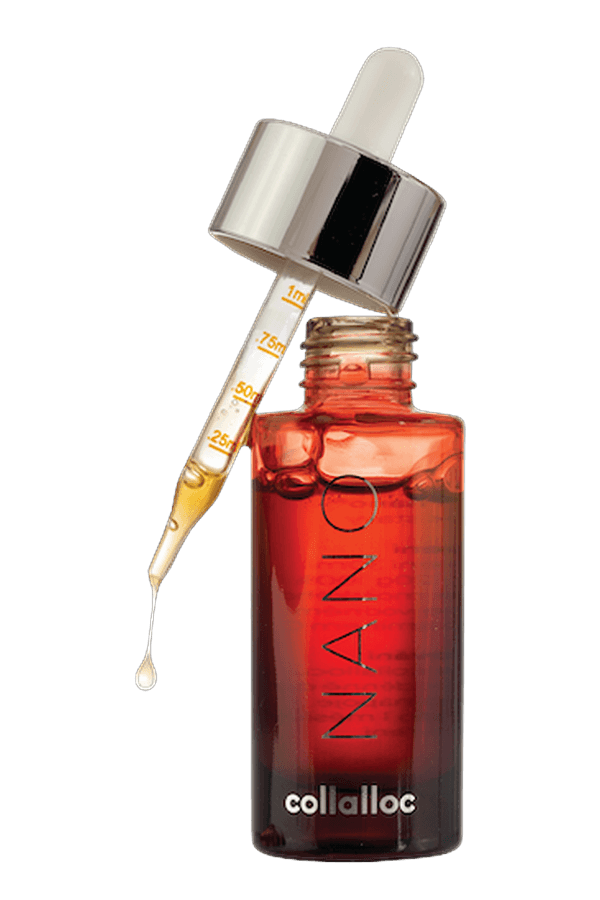
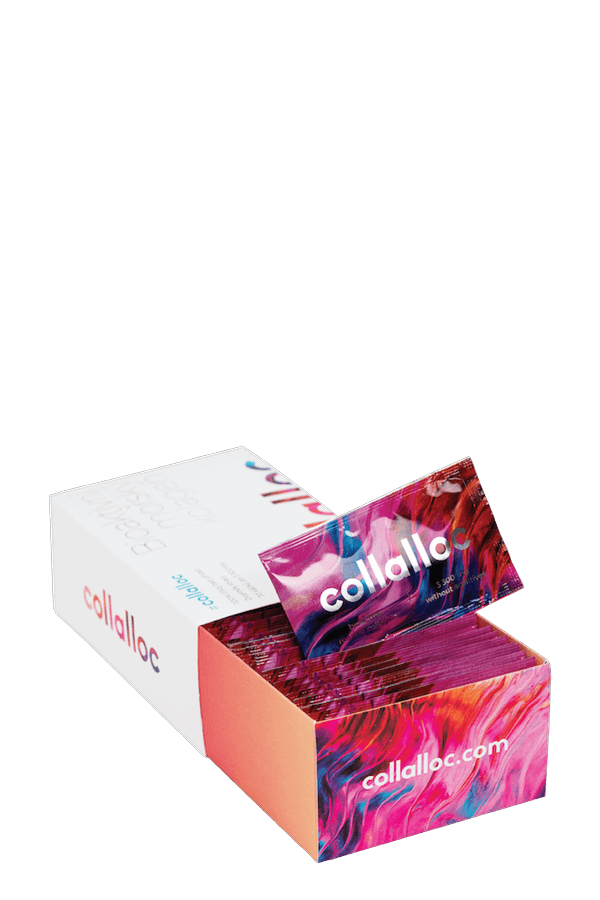
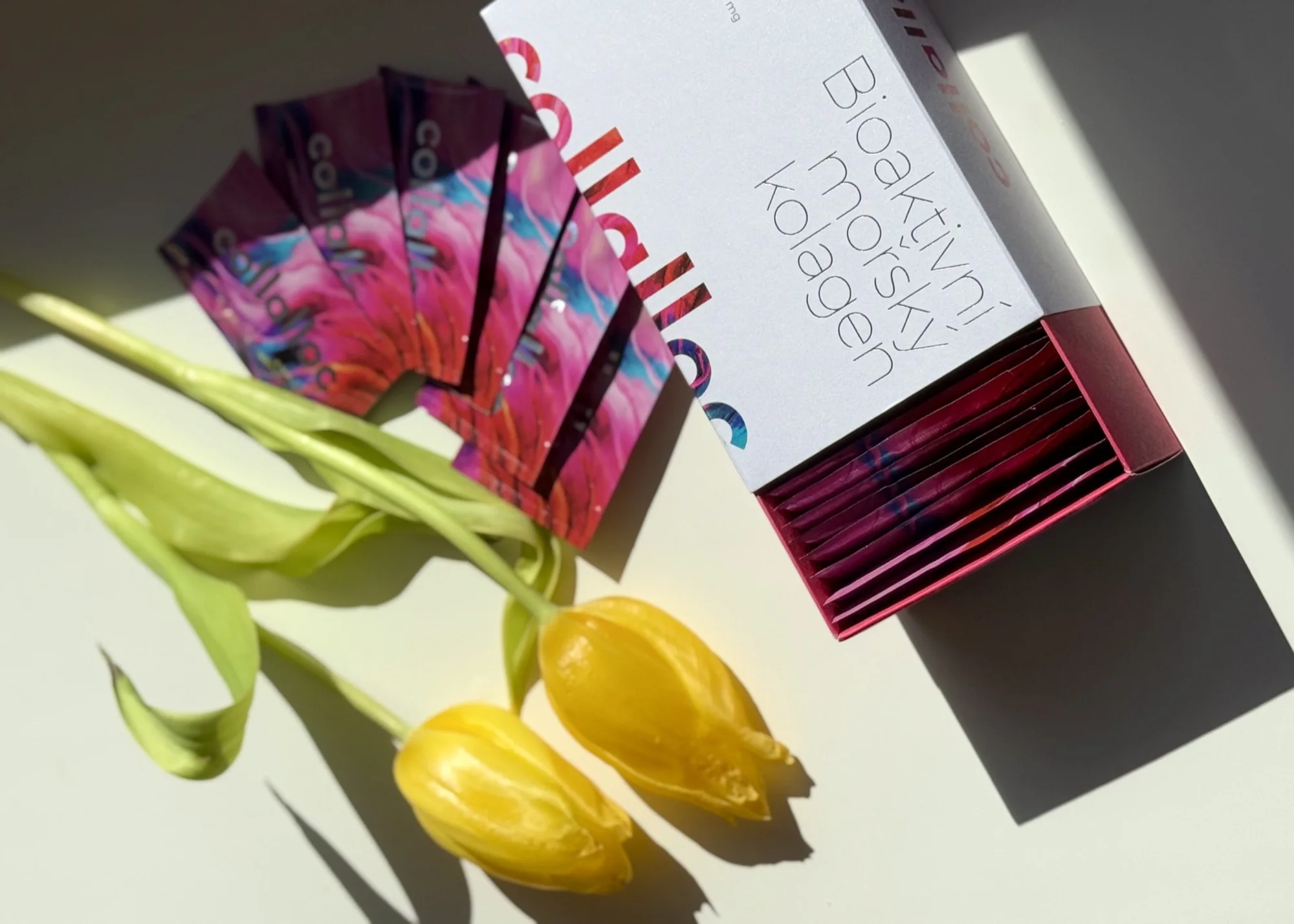
One sachet of collalloc kolagen contains 3,300 mg of hydrolysed marine collagen from North Sea fish with a molecular weight of around 500 Da, with no fillers, colourings or sweeteners. It is stirred into 200 ml of a cold or lukewarm drink, at most 60 °C. The sachets do not contain vitamin C. If you want it in one dose with collagen, you can reach for the liquid NANO 2.0: 1 ml contains 700 mg of marine collagen and 80 mg of vitamin C. Vitamin C contributes to normal collagen formation for the normal function of skin.
Frequently asked questions
How do you prepare your skin for the sun?
The most important thing is sunscreen every day from spring, not only in summer. In a randomised trial, no measurable increase in skin ageing was found over 4.5 years in people using sunscreen daily (Hughes et al., 2013). Apply it in a thick enough layer and a second time within an hour (Petersen and Wulf, 2014), and also drink, eat a varied diet and sleep.
How do you restore collagen in the skin?
The body makes the collagen in your skin itself, from the protein you eat. The most you can do for it is to limit UV radiation, which triggers the enzymes that break down collagen: after a single exposure, the breakdown of collagen fibres was 58% higher (Fisher et al., 1997). With food supplements the result is uncertain, as independent studies found no effect on the skin (Myung and Park, 2025).
Does drinking more water help the skin?
A little, mainly in people who drink little. A review of six studies found a slight increase in skin hydration after additional water, but the authors rate the evidence as weak (Akdeniz et al., 2018).
Does lack of sleep show on the skin?
According to studies, yes. After a night without sleep, independent observers rated people as more tired and less healthy-looking (Axelsson et al., 2010). Women who slept well in the long term had 30% better recovery of the skin barrier than women with poor sleep (Oyetakin-White et al., 2015).
Will collagen replace sunscreen?
No. Collagen as a food supplement does not protect the skin from UV radiation, and we make no such promise for it. In a randomised trial, it was daily sunscreen that showed a smaller increase in signs of skin ageing (Hughes et al., 2013).
When should I start collagen if I want to try it for summer?
In good time, roughly 2 to 3 months in advance. A randomised trial of 69 women assessed the skin after 8 weeks of daily use (Proksch et al., 2014). Only mix collagen into drinks up to 60 °C.
Sources
- Sunscreen and prevention of skin aging: a randomized trial Hughes M. C., Williams G. M., Baker P., Green A. C., Annals of Internal Medicine, 2013
- Application of sunscreen--theory and reality Petersen B., Wulf H. C., Photodermatology, Photoimmunology & Photomedicine, 2014
- Pathophysiology of premature skin aging induced by ultraviolet light Fisher G. J., Wang Z. Q., Datta S. C., Varani J., Kang S., Voorhees J. J., The New England Journal of Medicine, 1997
- Does dietary fluid intake affect skin hydration in healthy humans? A systematic literature review Akdeniz M., Tomova-Simitchieva T., Dobos G., Blume-Peytavi U., Kottner J., Skin Research and Technology, 2018
- Dietary nutrient intakes and skin-aging appearance among middle-aged American women Cosgrove M. C., Franco O. H., Granger S. P., Murray P. G., Mayes A. E., The American Journal of Clinical Nutrition, 2007
- Beauty sleep: experimental study on the perceived health and attractiveness of sleep deprived people Axelsson J., Sundelin T., Ingre M., Van Someren E. J., Olsson A., Lekander M., BMJ, 2010
- Does poor sleep quality affect skin ageing? Oyetakin-White P., Suggs A., Koo B., Matsui M. S., Yarosh D., Cooper K. D., Clinical and Experimental Dermatology, 2015
- Oral supplementation of specific collagen peptides has beneficial effects on human skin physiology: a double-blind, placebo-controlled study Proksch E., Segger D., Degwert J., Schunck M., Zague V., Oesser S., Skin Pharmacology and Physiology, 2014
- Effects of Collagen Supplements on Skin Aging: A Systematic Review and Meta-Analysis of Randomized Controlled Trials Myung S. K., Park Y., The American Journal of Medicine, 2025