MagazineMenopause and collagen: What happens to your skin and what to actually do about it
Menopause and collagen: What happens to your skin and what to actually do about it
After forty, your skin stops cooperating in a way you are used to. It is not your fault, it is biology. But it is not a sentence without a sequel either. What is really happening in the body and what to do about it from within.

What is really happening in the body
Estrogen is not just a reproductive hormone. It is one of the main regulators of collagen synthesis in the body. When its level starts to drop, first gradually in perimenopause, then more markedly after menopause, the skin loses one of its key building signals.
The result you see in the mirror is biologically predictable: the skin loses density, fine lines deepen, the contours of the face change. This is not a cosmetic problem. It is the loss of a structural protein that formed the support of your skin.
According to a review in the journal Dermato-Endocrinology (Thornton, 2013), women lose up to 30 % of their skin collagen in the first five years after menopause. After that, the loss continues at a rate of about 2 % per year.
„After forty, I thought skin care was about a better cream. Then I understood that the problem is inside, and I started to address it from within.“
Why a cream is not enough
Collagen in a cream does not reach the deeper layers of the skin. The molecule is too large. Topical products can hydrate the surface and temporarily fill fine lines, but they cannot replace what the body has stopped producing on its own.
Supplementation with hydrolysed marine collagen works differently. Peptides with a low molecular weight, ideally below 500 Da, pass through the intestinal barrier and enter the bloodstream. There they serve as a signal: the body recognises them as fragments of its own collagen and begins to increase its synthesis.
So it is not about transferring collagen from a sachet into your skin. It is about using it as a biological trigger. You will find more about what happens in the body in the process in the article What really happens to collagen in the body.
What the science says: specific numbers
There is no need to believe marketing. The data are available:
- A randomised study from 2021 (Journal of Drugs in Dermatology): women aged 45 to 65 taking hydrolysed marine collagen for 12 weeks showed a statistically significant improvement in skin hydration and a reduction in wrinkle depth compared with the placebo group.
- A meta-analysis from 2019 (Journal of Cosmetic Dermatology): a pooled analysis of 11 studies confirmed that oral collagen peptides improve skin elasticity and hydration, with an effect that persists even after supplementation ends.
The key parameter is molecular weight. Collagen above 1 000 Da is digested like an ordinary protein, below 500 Da it passes through the intestinal barrier as a bioactive peptide. collalloc uses collagen with a size of 500 Da. This is not a marketing claim, it is an analytically verified value of every batch.
When to start and why timing matters
Collagen banking, the idea that you can invest in your collagen reserves before the decline becomes visible, is not a marketing invention. It is a logical consequence of how collagen synthesis works.
The body can replenish collagen more efficiently when it still has functioning fibroblasts and enough estrogen support. With each year after menopause this ability is lower, not zero, but lower. That is why the correct answer to the question „when to start“ is almost always: earlier than now.
If you are already in menopause, the effect of supplementation is still demonstrable. Just count on the first results coming after 8 to 12 weeks of regular use, not after 14 days.
„I started supplementation at 52, a year after menopause. After three months, for the first time since forty-five, I noticed that my skin did not look more tired than the day before.“
In practice: what to do
- Dose matters. The clinically relevant dose in the available studies ranges between 2.5 and 10 g of hydrolysed collagen per day. collalloc sachets contain 5 g of bioactive peptide per daily dose.
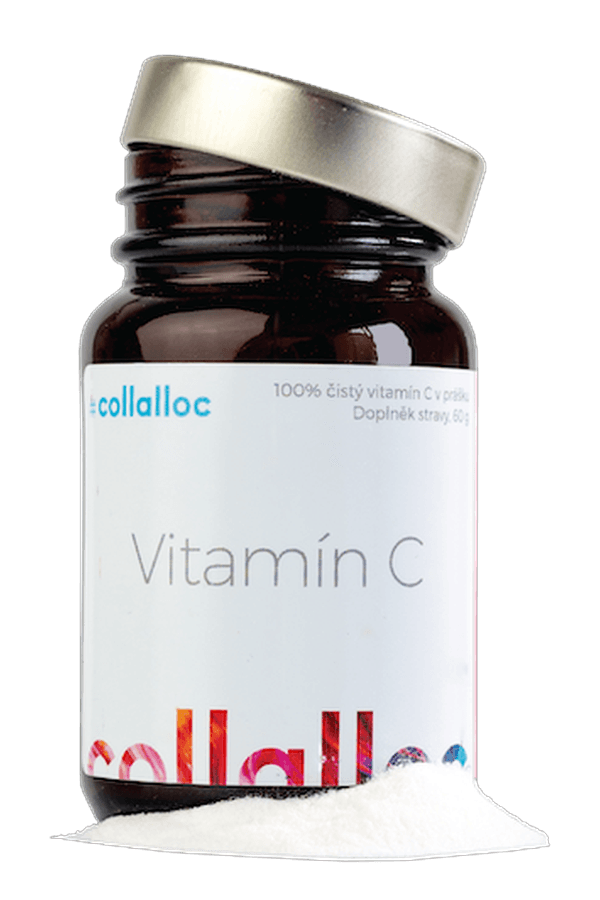
- Vitamin C is not optional. Collagen synthesis in the body requires vitamin C as a cofactor. Without it the peptides signal, but the body has no tools for building. If you do not have it regularly in your diet, supplement it.
- Consistency, not intensity. Collagen is not an acute intervention, it is a long-term signal. Thirty days regularly is more valuable than a hundred days sporadically.
- Form comes second. Powder, drink, capsule, what is decisive is molecular weight and daily dose, not the packaging. If a product does not state the molecular weight, it is not informing you about the most important thing.
What to take away from this
Menopause changes the conditions. It does not completely change the rules of the game. The skin still responds to the right signals, they just need to be delivered deliberately and with more realistic expectations about the time horizon.
Hydrolysed marine collagen with a low molecular weight is one of the few dietary supplements backed by enough data to deserve regular attention. It is not a miracle. It is a tool. And tools work when they are used correctly.
Frequently asked questions
When should you start collagen during menopause?
As early as possible. The body replenishes collagen more efficiently while it still has functioning fibroblasts and estrogen support. Even after menopause the effect is demonstrable, just over a longer horizon of 8 to 12 weeks.
Does collagen work even after menopause?
Yes. Studies in women aged 45 to 65 demonstrated improved hydration and reduced wrinkle depth. The results come more slowly, not after 14 days, but they are measurable.
Why is a collagen cream not enough?
The collagen molecule in a cream is too large to penetrate the deeper layers of the skin. A cream hydrates the surface, but it does not replace the collagen the body has stopped producing. Supplementation works as an internal signal for the production of your own collagen.
Sources
- Estrogens and aging skin Thornton MJ, Dermato-Endocrinology, 2013