MagazineIs collagen worth taking? What studies say about its effects and what they don’t
Is collagen worth taking? What studies say about its effects and what they don’t
Is collagen worth taking? Effects on skin, hair, nails and joints in studies, the dispute over company-funded research, absorption and when it makes no sense.

Short answer: it depends on what you expect from collagen. Most of the research is on skin: a meta-analysis of 26 randomised studies with 1,721 participants found better skin hydration and elasticity compared with placebo (Pu et al., 2023). Another meta-analysis, however, showed that the improvement appears only in company-funded studies, and independent studies did not measure it (Myung and Park, 2025). For hair, nails and joints there are first promising studies, but no certainty. So collagen makes sense to try for at least 3 months with realistic expectations, not as a guaranteed solution.
Overview: what studies showed and how solid it is
| Area | What studies showed | How solid it is |
|---|---|---|
| Skin | Better hydration and elasticity compared with placebo (Pu et al., 2023) | Dispute over the influence of funding (Myung and Park, 2025) |
| Hair | Larger hair diameter after 24 weeks (Hwang et al., 2026) | One study with placebo, one raw material |
| Nails | Faster growth and fewer broken nails (Hexsel et al., 2017) | Small study without placebo |
| Joints | Less joint pain during movement in athletes (Clark et al., 2008; Zdzieblik et al., 2017) | Only in athletes, not a treatment |
| Absorption | Collagen peptides in the blood, peaking after 1 to 2 hours (Iwai et al., 2005) | Measured in humans |
Skin: the most studies
Of all the areas, skin is the best researched. The meta-analysis by Pu et al. (2023) combined 26 randomised studies with 1,721 participants and found better skin hydration and elasticity compared with placebo. The authors, however, described a number of biases in the included studies and call for larger studies. What exactly the studies measured, and with which collagen, we go through in our article Marine collagen and skin: what science really says.
Where the dispute lies: who pays for the studies
The meta-analysis by Myung and Park (2025) went through 23 randomised studies with 1,474 participants. Taken together, hydration, elasticity and wrinkles improved, but once the studies were split by funding, the effect appeared only in company-funded studies. Neither independent studies nor high-quality studies measured an improvement, and the authors conclude that clinical evidence for collagen against skin ageing is still lacking. We sell collagen, and that is exactly why we write this openly.
Hair and nails: first promising studies
In a study of 114 women, hair diameter after 24 weeks on 1,000 mg of fish collagen peptides a day was larger than with placebo (Hwang et al., 2026). Two of the five authors work in product development at a food supplement company, and the result applies to one specific raw material. For nails, 25 people with brittle nails took 2.5 g of collagen peptides a day for 24 weeks: their nails grew 12% faster and broke 42% less often, but the study had no placebo group (Hexsel et al., 2017). More detail in our article Collagen for hair: what studies say and on the Collagen for nails page.
Joints: less pain during movement, not a treatment
In a study of 147 athletes without joint disease, joint pain when walking decreased more than with placebo after 24 weeks on 10 g of collagen hydrolysate a day, but data could be evaluated for only 97 of them (Clark et al., 2008). In 139 athletes with knee pain, pain during sport decreased more than with placebo after 12 weeks on 5 g of collagen peptides a day, while pain at rest did not differ significantly from placebo (Zdzieblik et al., 2017). Collagen does not treat osteoarthritis or any other joint disease, and long-term pain is a matter for a doctor. More in our article Collagen and joints: an honest review of the evidence.
Absorption: what happens to collagen in the body
A common objection is that collagen is broken down in the stomach like any other protein. Iwai et al. (2005), however, measured collagen peptides in the blood of volunteers after they drank pork and chicken collagen hydrolysate, mainly prolyl-hydroxyproline (Pro-Hyp), peaking after 1 to 2 hours and falling to half after 4 hours. Absorption into the blood does not by itself mean an effect on the skin, but it is the first step. In detail in our article Is the collagen I drink absorbed?
When collagen makes no sense
If you are allergic to fish, do not take marine collagen: fish collagen is a proven allergen, and antibodies reacted to it in five out of eight patients with fish allergy (Hamada et al., 2001). It makes no sense as a substitute for treatment, for example for osteoarthritis or hair loss caused by iron deficiency, or as a substitute for protein from food, because it does not contain all the essential amino acids. If you expect a change within a week, you will be disappointed: studies assessed the results after 12 to 24 weeks (Zdzieblik et al., 2017; Hwang et al., 2026). If you tend to get kidney stones, are pregnant, breastfeeding or taking medication, talk to your doctor first, and find out more in our article Side effects of collagen: what you should know.
How to take collagen if you want to try it
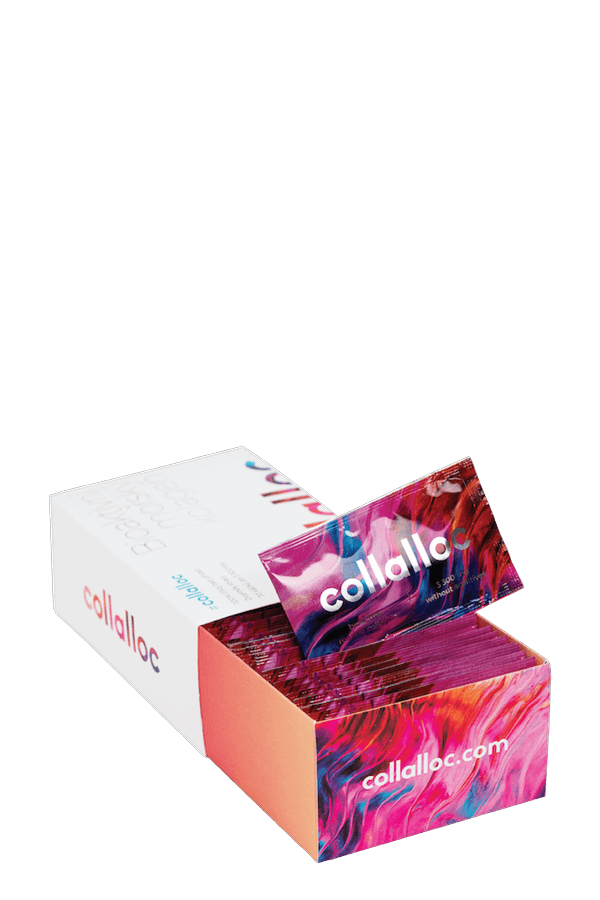
- Every day. The studies in this article used 1 to 10 g a day (Hwang et al., 2026; Clark et al., 2008), and one collalloc sachet contains 3.3 g.
- In a cold or lukewarm drink, no hotter than 60 °C. In water, juice, milk or a smoothie, not in hot coffee or tea.
- For at least 12 weeks. Only then does it make sense to assess the result, ideally using photos taken in the same light.
- Together with a varied diet. Collagen does not replace protein or micronutrients from food.
The studies did not prescribe any particular time of day, and what matters is regularity. More in our article How to take collagen correctly.
How we do it at collalloc
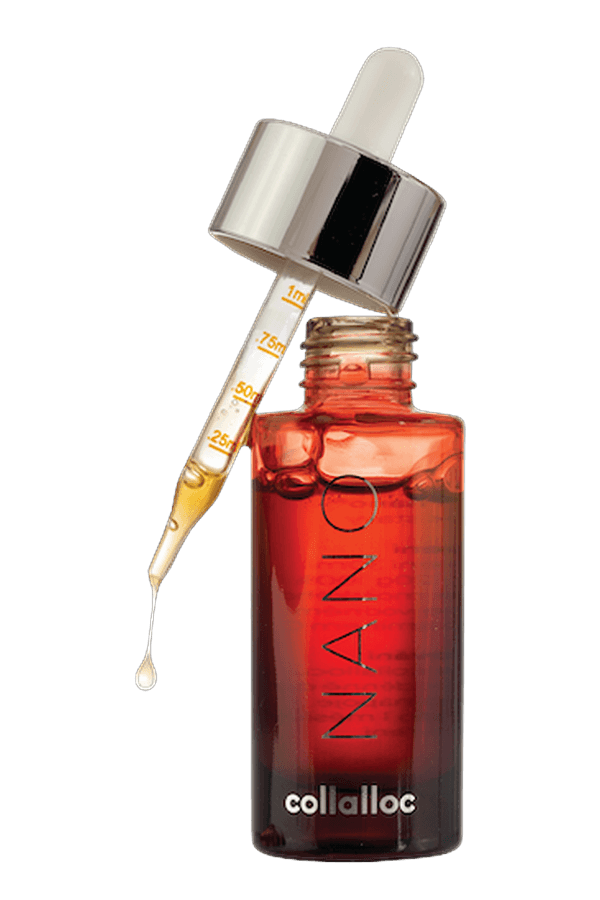
collalloc kolagen is hydrolysed marine collagen with a molecular weight of around 500 Da, with no sweeteners, colourings or flavourings. If you do not want to mix anything, you can reach for the liquid NANO 2.0 with vitamin C, which contributes to normal collagen formation for the normal function of skin. Collagen itself has no approved health claim in the EU (Regulation 432/2012), which is why we talk about research rather than promises. We test microbiology for every production batch and heavy metals every month in an external laboratory, and you will find the results on the product page and on the Laboratory page.
Frequently asked questions
Is collagen worth taking?
It can be, if your expectations are realistic. Skin has the most studies, and a meta-analysis of 26 studies found better hydration and elasticity compared with placebo (Pu et al., 2023). Independent studies, however, did not measure the effect (Myung and Park, 2025), so it is a 3-month trial, not a certainty.
What effects does collagen have?
In studies, skin hydration and elasticity improved most often, and in smaller studies also hair diameter, nail growth and joint pain during movement in athletes. Collagen, however, has no approved health claim in the EU, and the results of one raw material cannot be applied to every product.
Does collagen work, or is it marketing?
Something in between. The absorption of collagen peptides into the blood has been measured (Iwai et al., 2005), and a number of studies report improvements in the skin. A 2025 meta-analysis, however, showed that the improvement appears only in company-funded studies (Myung and Park, 2025).
How long should I take collagen before I see a result?
Studies assessed the results after 12 to 24 weeks. There is no point judging the result before three months of regular use.
How much collagen per day?
The studies mentioned in the article used 1 to 10 g a day. Stick to the dose on the pack, which for collalloc is one sachet (3.3 g) a day in a cold or lukewarm drink up to 60 °C.
When should you not take collagen?
Do not take marine collagen if you are allergic to fish. If you tend to get kidney stones, are pregnant, breastfeeding or take medication regularly, talk to your doctor first.
Sources
- Effects of Oral Collagen for Skin Anti-Aging: A Systematic Review and Meta-Analysis Pu S. Y., Huang Y. L., Pu C. M., Kang Y. N., Hoang K. D., Chen K. H., Chen C., Nutrients, 2023
- Effects of Collagen Supplements on Skin Aging: A Systematic Review and Meta-Analysis of Randomized Controlled Trials Myung S. K., Park Y., The American Journal of Medicine, 2025
- Low-Molecular-Weight Collagen Peptide Supplementation Improves Cellulite Severity, Skin Elasticity, and Hair Shaft Diameter: A Clinical Study with Pharmacokinetic Evaluation Hwang S., Won J., Kim S., Kang W., Park M., Journal of Medicinal Food, 2026
- Oral supplementation with specific bioactive collagen peptides improves nail growth and reduces symptoms of brittle nails Hexsel D., Zague V., Schunck M., Siega C., Camozzato F. O., Oesser S., Journal of Cosmetic Dermatology, 2017
- 24-Week study on the use of collagen hydrolysate as a dietary supplement in athletes with activity-related joint pain Clark K. L., Sebastianelli W., Flechsenhar K. R. et al., Current Medical Research and Opinion, 2008
- Improvement of activity-related knee joint discomfort following supplementation of specific collagen peptides Zdzieblik D., Oesser S., Gollhofer A., König D., Applied Physiology, Nutrition, and Metabolism, 2017
- Identification of food-derived collagen peptides in human blood after oral ingestion of gelatin hydrolysates Iwai K., Hasegawa T., Taguchi Y. et al., Journal of Agricultural and Food Chemistry, 2005
- Identification of collagen as a new fish allergen Hamada Y., Nagashima Y., Shiomi K., Bioscience, Biotechnology, and Biochemistry, 2001
- Commission Regulation (EU) No 432/2012 establishing a list of permitted health claims made on foods European Commission, Official Journal of the European Union, 2012