MagazineHow to choose a collagen supplement by age and health?
How to choose a collagen supplement by age and health?
Collagen is not one category. What a woman in her thirties needs differs from a woman past fifty or an active athlete. Three conditions, though, apply to everyone.

First: what applies to everyone
Regardless of age or goal, three conditions apply to every collagen product worth the money.
First: molecular weight below 500 Da. Only hydrolysed collagen in this range absorbs as a bioactive peptide. Without this number on the label, you do not know what you are buying.
Second: an absorbable dose. What matters is how much bioactive peptide actually reaches the body, not the number on the label. Clinical studies show an effect from roughly 2.5 g a day, but a gram of well-absorbed peptide below 500 Da beats several grams of collagen the body never takes up. That is why 500 mg of collagen complex per dose is too little, while 3,300 mg of pure peptide below 500 Da is a full daily dose.
Third: a clean composition. Sweeteners, colourants and binders are needless ballast. Pure hydrolysed collagen has as few additives as possible.
By age
25 to 35, prevention and collagen banking: collagen production has not dropped dramatically yet, but investing now gives the best biological return. Fibroblasts are active and supported by estrogen. The priority is regularity. A full daily dose of bioactive peptide is enough, the key is taking it every day.
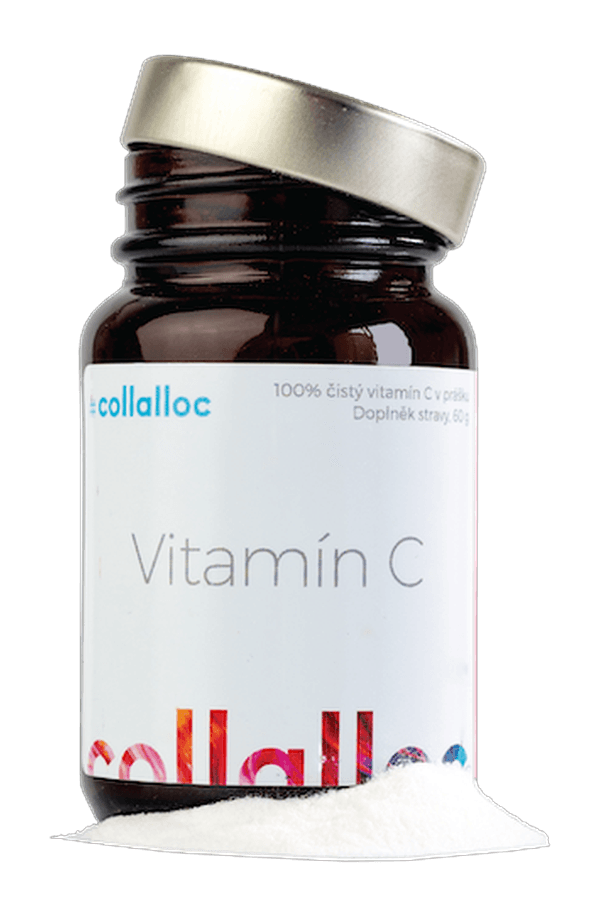
35 to 45, maintaining density and elasticity: the collagen decline is measurable. Perimenopause begins to affect hormonal support of collagen synthesis. The priority is consistent use and enough vitamin C as a cofactor.
45+ and menopause: estrogen has fallen, collagen loss has accelerated. Research confirms an effect of supplementation at this age too, but results come more slowly, in 8 to 12 weeks. The priority is patience, consistency, plus vitamin D3 and calcium for a synergistic effect on bones.
By health and goal
Joints and the musculoskeletal system: type II collagen, naturally present in chicken cartilage or as native collagen. Hydrolysed type I marine collagen also has a proven effect on joint pain in clinical studies.
Skin and elasticity: hydrolysed type I and III marine collagen, the best studied combination for skin applications.
Hair and nails: type I and III, the same as for skin. The effect on hair and nails is a side benefit of skin-focused supplementation.
Athletes and recovery: hydrolysed collagen and vitamin C taken an hour before training increase collagen synthesis in connective tissue, according to a study from Keith Baar's lab at UC Davis (Shaw et al., 2017).
Pregnancy and breastfeeding: collagen has not been clinically tested in pregnant women. Consult a doctor before starting.
The best collagen is the one you take every day. But first it has to meet the basics: molecular weight, dose, composition.
Frequently asked questions
What is the right daily dose of collagen?
Clinical studies show an effect from roughly 2.5 g a day. Absorption matters too: a well-absorbed peptide below 500 Da, like the 3,300 mg in a collalloc dose, delivers more usable collagen than a higher dose the body never takes up. 500 mg of collagen complex is too little.
Which collagen is best after forty?
Hydrolysed type I and III marine collagen below 500 Da, daily and consistently, ideally with vitamin D3 and calcium for bones after the drop in estrogen. After forty, regularity and patience matter more than the number of grams on the label.
When should athletes take collagen?
Hydrolysed collagen with vitamin C 30 to 60 minutes before training increases collagen synthesis in connective tissue.
Can I take collagen during pregnancy?
Collagen has not been clinically tested in pregnant women. Consult a doctor before starting.
Sources
- Vitamin C-enriched gelatin supplementation before intermittent activity augments collagen synthesis Shaw G, Lee-Barthel A et al., The American Journal of Clinical Nutrition, 2017