MagazineSkin and brain: what stress, sleep and skin have in common
Skin and brain: what stress, sleep and skin have in common
Skin and brain: what do they have in common? What studies have found about how stress and lack of sleep affect the skin barrier and the look of the skin.
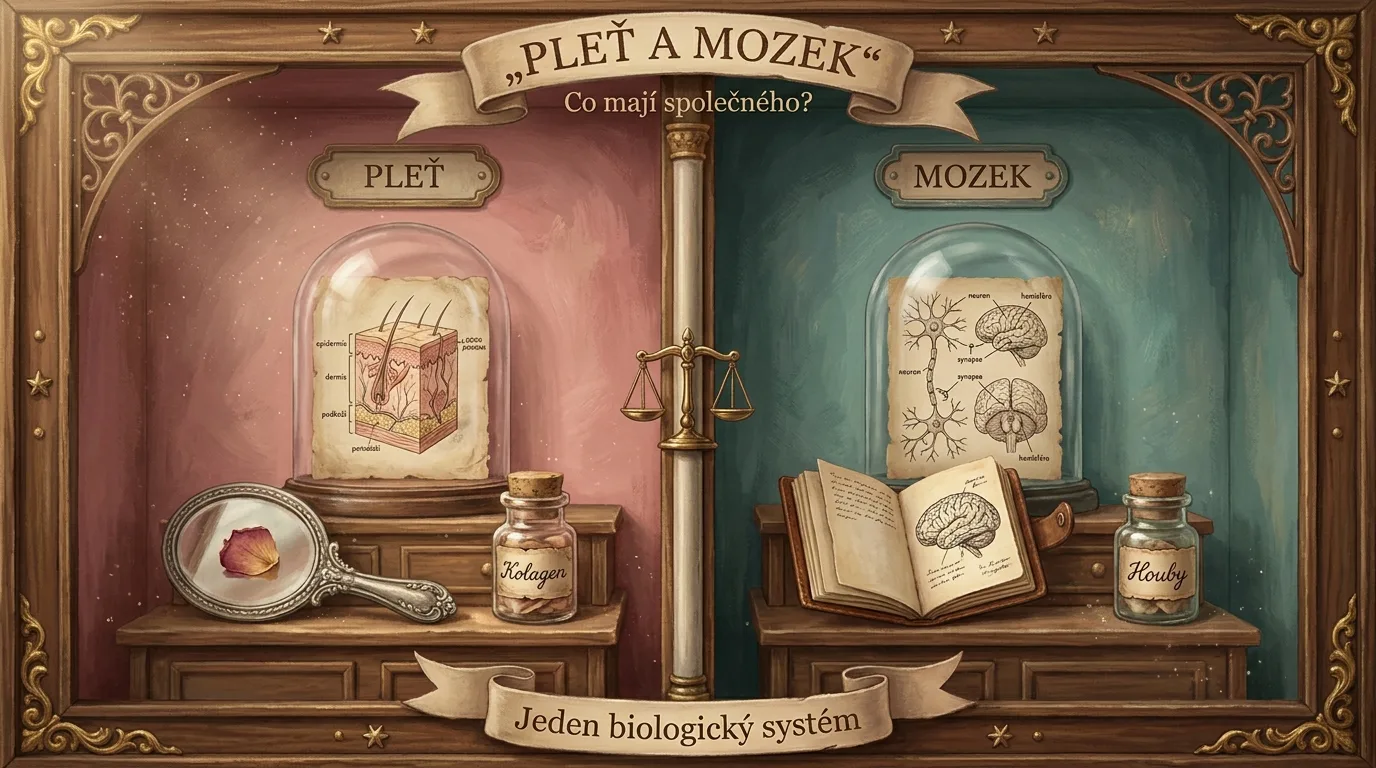
Short answer: skin and brain are more connected than it seems. The epidermis and the nervous system develop in the embryo from the same germ layer, and the skin has its own version of the stress axis we know from the brain (Slominski et al., 2013). That is why both stress and lack of sleep can be measured in the skin: in 27 students, skin barrier recovery slowed down during the exam period (Garg et al., 2001), and people looked less healthy and more tired in photos after 31 hours without sleep (Axelsson et al., 2010).
Why skin and brain meet at all
Both the epidermis and the brain develop from the ectoderm during embryonic development, that is, from the same outer layer of cells. A large number of nerve fibres end in the skin, and the skin does not respond to stress only through the brain. It has its own version of the stress axis we know from the brain and the adrenal glands: the skin produces the stress hormone CRF (corticoliberin) and its receptors, and CRF can be released from nerve endings and other cells in the skin during emotional stress and environmental strain. According to a review, CRF signals are involved, among other things, in controlling the barrier function of the epidermis (Slominski et al., 2013).
In practice, this means that skin is not just cosmetics and the head is not just productivity. What happens in the head can show in the condition of the skin, and scientists can measure it.
What is known about stress and skin
The skin barrier is the outermost layer of the epidermis, which keeps water in the skin and keeps irritants out. Scientists measure it by gently disrupting it with adhesive tape and watching how quickly water stops evaporating from the skin, that is, how quickly the barrier recovers.
This is how 27 medical, dental and pharmacy students were followed. During the exam period they felt more stress, and their skin barrier recovered more slowly than outside the exam period. After the exams, stress and barrier recovery returned to their original levels, and the barrier worsened most in those whose stress rose the most (Garg et al., 2001). In another study, 25 women went through a stressful interview in the laboratory: barrier recovery slowed, and cortisol, among other things, rose in their blood. Three days of physical strain in 10 women did not affect barrier recovery (Altemus et al., 2001).
What is known about sleep and skin
Lack of sleep can be seen and measured in the skin. In a Swedish experiment, 23 adults were photographed after a normal night with 8 hours of sleep and after 31 hours awake. Observers who saw the photos in random order rated the sleep-deprived faces as less healthy, more tired and less attractive (Axelsson et al., 2010). A follow-up study with 10 people described what the observers noticed: droopier eyelids, red and swollen eyes, darker circles under the eyes, paler skin, more visible wrinkles and fine lines, and droopier corners of the mouth (Sundelin et al., 2013).
One night without sleep also slowed skin barrier recovery in 11 women (Altemus et al., 2001). And in a US study of 60 women, those who had slept poorly over the long term, for 5 hours at most, had worse intrinsic skin ageing scores than women who slept 7 to 9 hours. The good sleepers had 30% better skin barrier recovery 72 hours after tape disruption, and their redness recovered better 24 hours after UV exposure (Oyetakin-White et al., 2015). However, this study only compared two groups and does not show that poor sleep was the only cause.
Overview: what the studies measured
| Stressor | What was measured | Study |
|---|---|---|
| Exam period | slower skin barrier recovery | Garg et al., 2001 |
| Stressful interview | slower barrier recovery, more cortisol | Altemus et al., 2001 |
| Night without sleep | slower barrier recovery | Altemus et al., 2001 |
| 31 hours awake | less healthy and more tired look | Axelsson et al., 2010 |
| Sleep of up to 5 hours | worse skin ageing score | Oyetakin-White et al., 2015 |
| 3 days of exercise | barrier unchanged | Altemus et al., 2001 |
Where collagen and functional mushrooms fit in
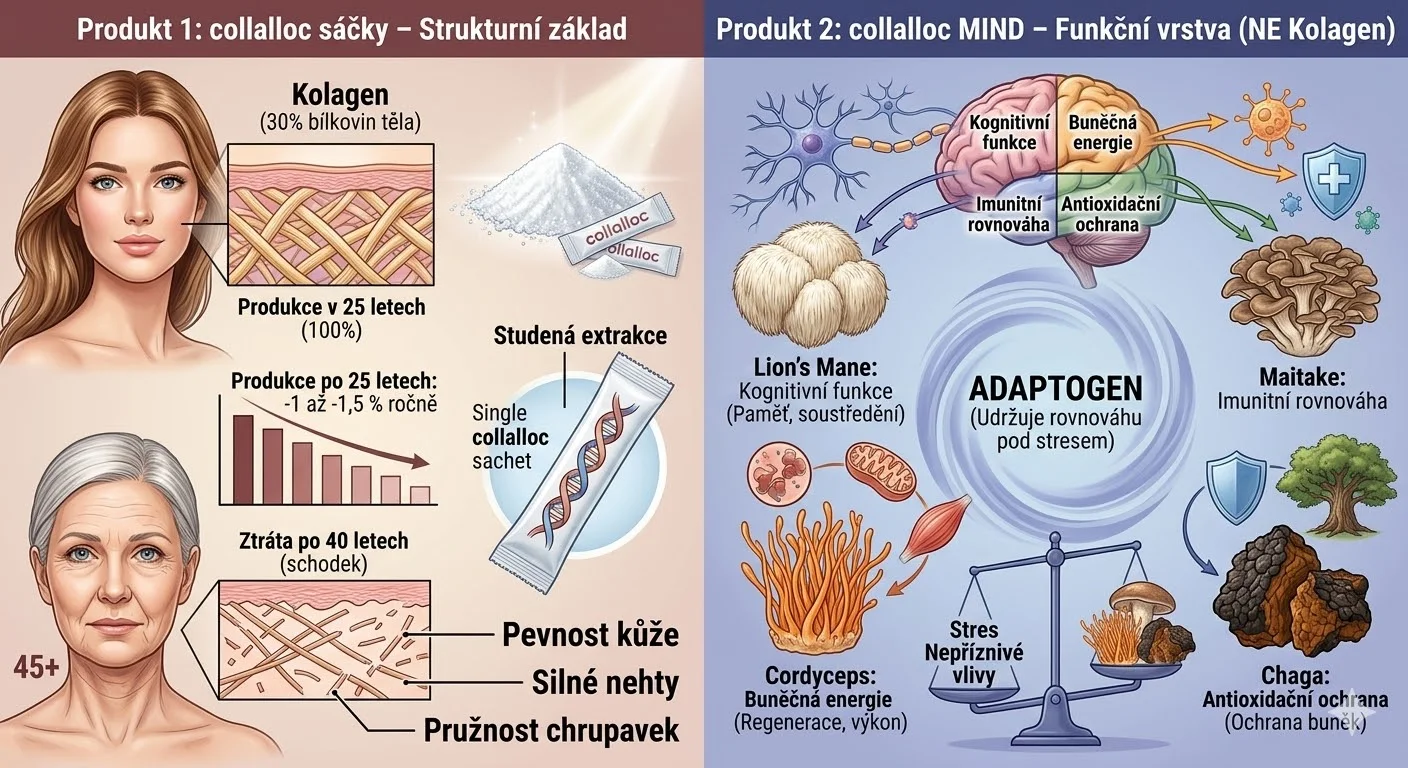
Collagen is the main protein of the dermis, the layer under the epidermis that gives skin its firmness. Research on collagen peptides as a food supplement therefore concerns skin, not the brain. In a randomised study in 69 women, measured skin elasticity improved after 8 weeks compared with placebo (Proksch et al., 2014). However, a meta-analysis of 23 randomised studies showed that independent and high-quality studies measured no improvement (Myung and Park, 2025). We have not found a study that examined whether collagen changes the impact of stress or lack of sleep on the skin.
We talk about collalloc MIND as a daily ritual, not as a product for the mind. What research on collagen and skin shows so far is summarised in our article Marine collagen and skin: what science really says.
What to do for your skin and mind without supplements
- Sleep: an expert panel of the US National Sleep Foundation recommends 7 to 9 hours of sleep for adults and 7 to 8 hours for older adults (Hirshkowitz et al., 2015). The women with good sleep in the study above slept exactly 7 to 9 hours (Oyetakin-White et al., 2015).
- Demanding periods: in the study with students, barrier recovery returned to its original level after the exams (Garg et al., 2001). So during a demanding period, give your skin gentle care and do not try new irritating products.
- Exercise: in a small study, three days of physical strain did not slow skin barrier recovery (Altemus et al., 2001).
- Sun: protection from UV radiation remains the basis of skincare at any age.
How we approach it at collalloc
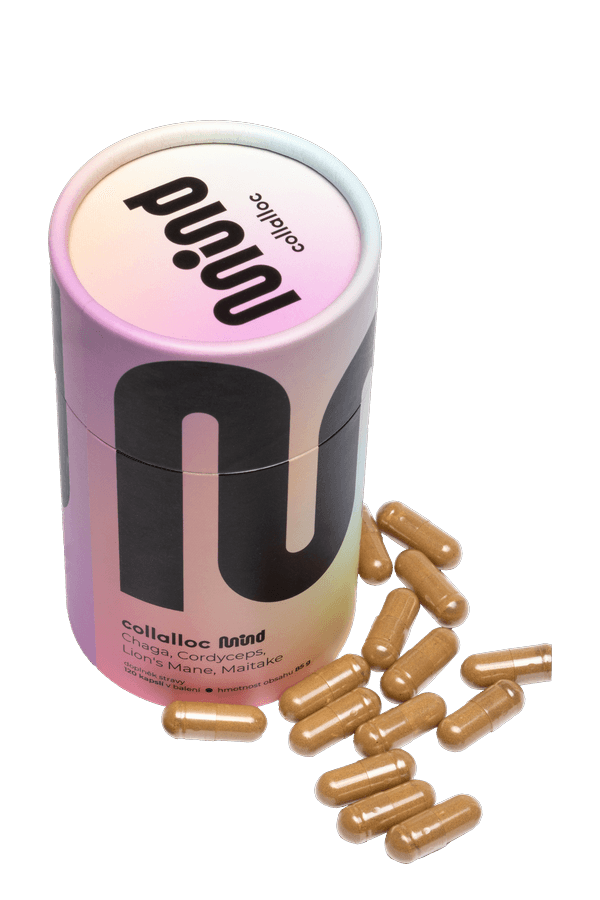
collalloc kolagen is hydrolysed marine collagen from North Sea fish, 3,300 mg per sachet, for a cold or lukewarm drink up to 60 °C. collalloc MIND contains four functional mushrooms, Lion’s Mane, Cordyceps, Chaga and Maitake, with 600 mg of extract from each in 4 capsules a day, caffeine-free. You can take both products together in the morning, but they will not replace sleep, rest or sun protection. We write about what research says on collagen and skin on our Collagen for skin page.
Frequently asked questions
What do skin and brain have in common?
The epidermis and the nervous system develop in the embryo from the ectoderm, and the skin has its own version of the stress axis we know from the brain, including the stress hormone CRF (Slominski et al., 2013). That is why psychological stress and lack of sleep can show in the skin and can be measured.
Can stress worsen the condition of your skin?
Studies show that stress slows skin barrier recovery. In 27 students, the barrier recovered more slowly during the exam period than outside it (Garg et al., 2001), and in 25 women a stressful interview in the laboratory slowed it down (Altemus et al., 2001).
How does lack of sleep show in your skin?
After 31 hours awake, observers rated the faces in photos as less healthy and more tired, and on a scale up to 100, health was rated 63 on average versus 68 after normal sleep (Axelsson et al., 2010). They mainly noticed droopy eyelids, circles under the eyes, paler skin and more visible fine wrinkles (Sundelin et al., 2013).
How many hours of sleep does an adult need?
An expert panel of the National Sleep Foundation recommends 7 to 9 hours for adults and 7 to 8 hours for older adults (Hirshkowitz et al., 2015). In a study of 60 women, those who slept 7 to 9 hours had 30% better skin barrier recovery than women who slept 5 hours at most (Oyetakin-White et al., 2015).
Do collagen or functional mushrooms affect the brain and stress?
Studies do not show this. Research on collagen peptides concerns skin, and even there the results are not clear-cut (Myung and Park, 2025).
What does research say about collagen and skin?
In a randomised study in 69 women, measured skin elasticity improved after 8 weeks compared with placebo (Proksch et al., 2014). However, a meta-analysis of 23 studies with 1,474 participants found an improvement only in studies funded by pharmaceutical companies, and independent studies did not measure it (Myung and Park, 2025).
Sources
- Key role of CRF in the skin stress response system Slominski A. T., Zmijewski M. A., Zbytek B., Tobin D. J., Theoharides T. C., Rivier J., Endocrine Reviews, 2013
- Psychological stress perturbs epidermal permeability barrier homeostasis: implications for the pathogenesis of stress-associated skin disorders Garg A., Chren M. M., Sands L. P., Matsui M. S., Marenus K. D., Feingold K. R., Archives of Dermatology, 2001
- Stress-induced changes in skin barrier function in healthy women Altemus M., Rao B., Dhabhar F. S., Ding W., Granstein R. D., The Journal of Investigative Dermatology, 2001
- Beauty sleep: experimental study on the perceived health and attractiveness of sleep deprived people Axelsson J., Sundelin T., Ingre M., Van Someren E. J., Olsson A., Lekander M., BMJ, 2010
- Cues of fatigue: effects of sleep deprivation on facial appearance Sundelin T., Lekander M., Kecklund G., Van Someren E. J., Olsson A., Axelsson J., Sleep, 2013
- Does poor sleep quality affect skin ageing? Oyetakin-White P., Suggs A., Koo B., Matsui M. S., Yarosh D., Cooper K. D., Clinical and Experimental Dermatology, 2015
- National Sleep Foundation's sleep time duration recommendations: methodology and results summary Hirshkowitz M., Whiton K., Albert S. M., Alessi C., Bruni O., DonCarlos L., Sleep Health, 2015
- Oral supplementation of specific collagen peptides has beneficial effects on human skin physiology: a double-blind, placebo-controlled study Proksch E., Segger D., Degwert J., Schunck M., Zague V., Oesser S., Skin Pharmacology and Physiology, 2014
- Effects of Collagen Supplements on Skin Aging: A Systematic Review and Meta-Analysis of Randomized Controlled Trials Myung S. K., Park Y., The American Journal of Medicine, 2025