MagazineCollagen banking: what it is and what in the trend makes sense
Collagen banking: what it is and what in the trend makes sense
What is collagen banking, and is early collagen care worth it? How skin collagen production falls with age, what prevention is and what we know about supplements.
Short answer: collagen banking means starting to look after the collagen in your skin before it declines with age. The part concerned with protecting collagen makes sense: its production in the skin falls with age (Varani et al., 2006) and UV radiation breaks it down (Fisher et al., 1997). The best-tested prevention is daily sunscreen, with which people in a randomised study gained 24% fewer signs of skin ageing over 4.5 years (Hughes et al., 2013), along with not smoking and talking to a dermatologist about retinoids. No study has shown that collagen from supplements can be “saved for later” when you are young (Myung and Park, 2025).
What collagen banking is
The term spread through cosmetics advertising and social media. The idea resembles a savings account: if you look after the collagen in your skin from the age of twenty or twenty-five, you are supposed to have “savings” for the time when its production slows down. In the PubMed database, we found the term collagen banking neither in the title nor in the abstract of any study, so it is not a scientific term.
The comparison with saving holds in one respect: long-term sun exposure adds premature ageing from the sun on top of age-related skin ageing (Fisher et al., 1997), and that adds up over the years. In another respect it falls short: you cannot stock up on collagen by eating more of it now. Collagen from a supplement is first broken down in the body into peptides and amino acids, and the body itself decides where to use them.
How collagen in the skin declines with age
Collagen makes up at least 70% of the dry weight of the dermis, the layer of skin that gives it strength (Lahmann et al., 2001). It is made by cells called fibroblasts, and they make less of it with age. Fibroblasts from the skin of people over 80 produced roughly a third less type I procollagen in the laboratory than fibroblasts from people aged 18 to 29 (56 versus 82 ng/ml). In young skin, a larger part of the cell surface was also attached to collagen fibres (78 versus 58%), which the authors interpret as a stronger mechanical stimulus for collagen production (Varani et al., 2006).
In women, the decline speeds up after menopause: in a London study, skin collagen content and skin thickness fell by 1 to 2% for every year after menopause (Brincat et al., 1987). This is a natural process that affects everyone, not a disorder. We describe it in more detail in the article Collagen and skin ageing.
What breaks down collagen in the skin
Sun. UV radiation triggers enzymes in the skin that cleave collagen. In an experiment with 59 volunteers aged 21 to 58, the breakdown of type I collagen fibres after a single exposure was 58% higher than in unexposed skin, and after four exposures every other day, enzyme activity stayed raised for a whole week (Fisher et al., 1997).
Smoking. Researchers measured more mRNA for the enzyme MMP-1, which cleaves collagen, in the skin of smokers than in non-smokers (Lahmann et al., 2001). In photographs of 79 pairs of identical twins in which only one twin smoked or one had smoked at least 5 years longer, the smoking twins had more pronounced bags under the eyes, nasolabial folds and wrinkles around the lips. The difference was visible with as little as five extra years of smoking (Okada et al., 2013).
Prevention that is backed by research
1. Sunscreen every day. The strongest evidence for collagen banking belongs not to a supplement but to a cream. In an Australian randomised study of 903 adults under 55, the group that applied broad-spectrum sunscreen every day showed no measurable increase in skin ageing over 4.5 years, and the changes were 24% smaller than in the group using sunscreen occasionally (Hughes et al., 2013). Apply it mainly to your face, neck, décolletage and the backs of your hands.
2. Do not smoke. In twins, smoking showed on the skin with a difference of just five years (Okada et al., 2013). If you smoke, the most you can do for your skin is to stop, and your GP can advise you on quitting.
3. Retinoids, but with a dermatologist. Tretinoin is a vitamin A derivative sold in the EU as a prescription medicine. In a study in which 29 people with sun-damaged skin used either a cream with 0.1% tretinoin or the same cream without the active ingredient every day for 10 to 12 months, type I collagen formation rose by 80% with tretinoin and fell by 14% without it (Griffiths et al., 1993). Retinoids can, however, irritate the skin, increase its sensitivity to the sun and are not suitable during pregnancy. Decide with a dermatologist whether a retinoid suits you, and which one.
4. A diet with enough protein. The body builds collagen from the amino acids in the protein you eat, so eat enough fish, eggs, dairy products, meat or pulses, along with vegetables and fruit containing vitamin C. Vitamin C contributes to normal collagen formation for the normal function of skin. Which foods contain collagen is covered in the article Collagen-rich foods.
Overview: what in collagen banking is backed by research
| What | Study result | Study type |
|---|---|---|
| Daily SPF | 24% fewer signs of ageing | randomised |
| Not smoking | more signs of facial ageing in smokers | twin comparison |
| Tretinoin | 80% more type I collagen | controlled |
| Collagen supplement | no effect in independent studies | meta-analysis |
What we know and do not know about collagen supplements in younger people
Studies of collagen supplements for the skin were done mainly in women. A meta-analysis of 19 randomised studies included 1,125 participants aged 20 to 70, the vast majority of them women, and hydration, elasticity and wrinkles came out better in it than with placebo (de Miranda et al., 2021). A newer meta-analysis of 23 studies with 1,474 participants, however, showed that improvements were measured only by studies funded by manufacturers. Independent and high-quality studies found no effect, and the authors conclude that there is so far no evidence from human studies supporting the use of collagen to prevent skin ageing (Myung and Park, 2025).
What we do not know: we found no study in PubMed that followed whether collagen taken at twenty or twenty-five affects the skin ten or twenty years later. The randomised studies we came across lasted weeks to months, not years. So think of collagen in a supplement as a food you can include in your diet, not as a deposit in an account. From what age collagen is taken and how to choose by age is discussed in the article How to choose collagen by age.
How we do it at collalloc
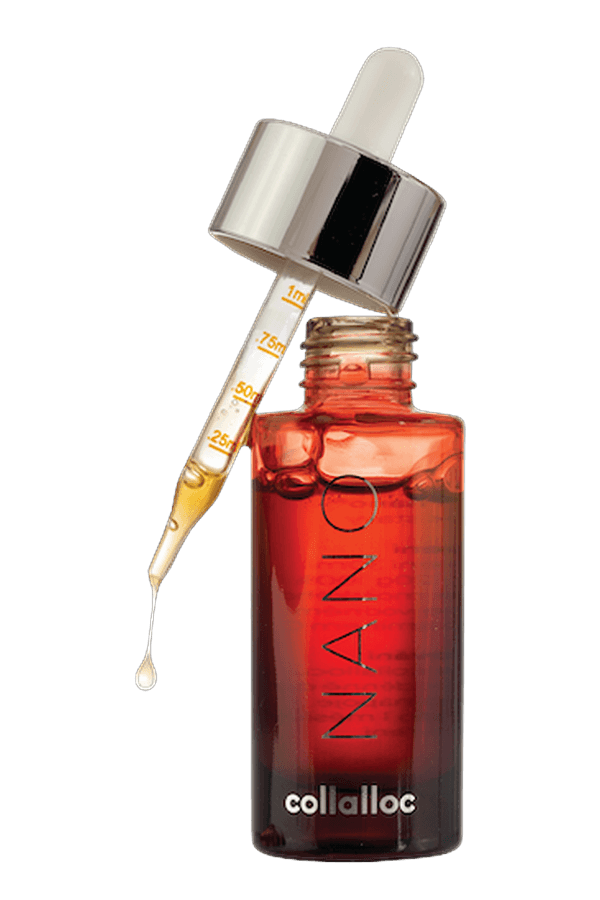
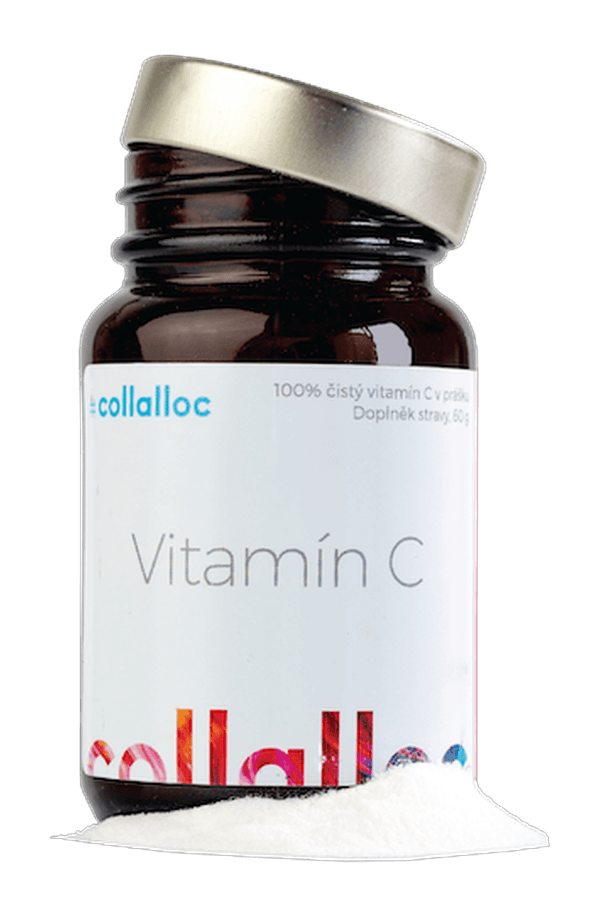
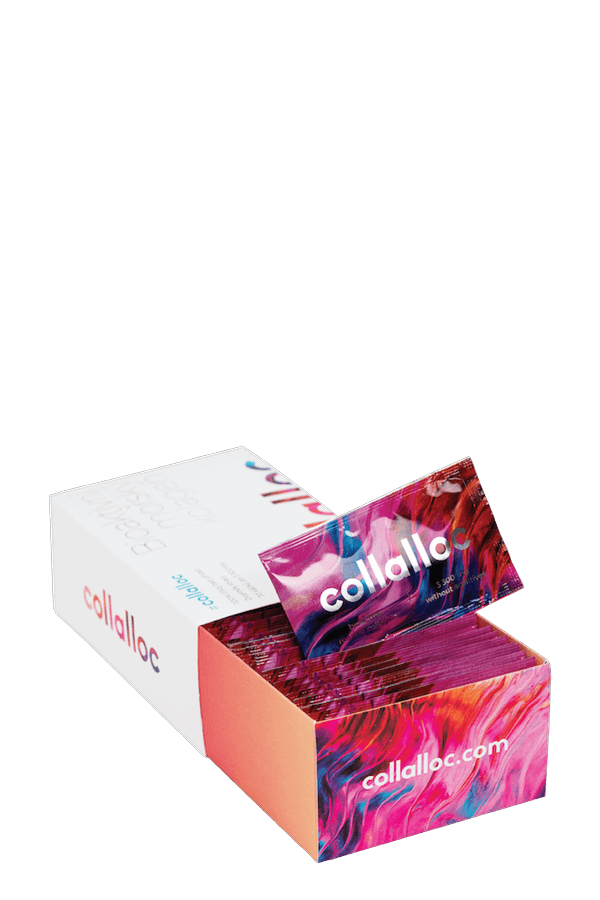
We will not claim that you can “save up” collagen at twenty. collalloc kolagen is a food supplement: one sachet contains 3,300 mg of hydrolysed marine collagen from North Sea fish with a molecular weight of around 500 Da, with no fillers, colourings or sweeteners, for drinks up to 60 °C. The sachets do not contain vitamin C, while the liquid NANO 2.0 has 80 mg of it in 1 ml along with 700 mg of collagen. Vitamin C contributes to normal collagen formation for the normal function of skin. If you try it, see it as part of a routine alongside sunscreen, not instead of it. What research says about collagen and skin is summarised on our page Collagen for skin.
Frequently asked questions
What is collagen banking (banking collagen)?
A trend from cosmetics advertising and social media: starting to look after the collagen in your skin before it declines with age. It is not a scientific term: in PubMed, we did not find it in the title or abstract of any study. Its protective part, daily sunscreen, is the best tested (Hughes et al., 2013).
At what age should you start collagen banking?
With sunscreen and not smoking, right away: in a randomised study of adults under 55, daily sunscreen led to 24% fewer signs of skin ageing (Hughes et al., 2013). No age can be recommended for collagen supplements: the studies were done mainly in women aged 20 to 70, and we found no long-term study in young people (de Miranda et al., 2021).
How quickly does collagen in the skin decline with age?
Gradually. Fibroblasts from people over 80 produced roughly a third less type I procollagen in the laboratory than fibroblasts from people aged 18 to 29 (Varani et al., 2006). In women, the decline speeds up after menopause, with skin collagen content falling by 1 to 2% a year (Brincat et al., 1987).
Which foods are rich in collagen?
Only animal foods with connective tissue contain collagen, for example fish and chicken skin, gelatin or long-simmered broth. The body, however, builds collagen from the amino acids of any protein, so eating enough protein overall matters more. Vitamin C contributes to normal collagen formation for the normal function of skin.
Collagen before and after: what did the studies show?
Across 19 randomised studies combined, hydration, elasticity and wrinkles came out better after collagen than with placebo (de Miranda et al., 2021). But when the studies were split by funding, only those paid for by manufacturers showed an improvement, not the independent ones (Myung and Park, 2025). So take before and after photos from adverts with a pinch of salt.
Is it worth taking collagen at 25?
No study has backed this up for preventing skin ageing, and independent, high-quality studies found no effect on the skin (Myung and Park, 2025). If you want to do something for the collagen in your skin at 25, start with daily sunscreen and not smoking. You can take collagen as a food supplement, but it does not come with a promise of long-term skin protection.
Sources
- Decreased collagen production in chronologically aged skin: roles of age-dependent alteration in fibroblast function and defective mechanical stimulation Varani J., Dame M. K., Rittie L., Fligiel S. E., Kang S., Fisher G. J., The American Journal of Pathology, 2006
- Matrix metalloproteinase-1 and skin ageing in smokers Lahmann C., Bergemann J., Harrison G., Young A. R., The Lancet, 2001
- A study of the decrease of skin collagen content, skin thickness, and bone mass in the postmenopausal woman Brincat M., Kabalan S., Studd J. W., Moniz C. F., de Trafford J., Montgomery J., Obstetrics and Gynecology, 1987
- Pathophysiology of premature skin aging induced by ultraviolet light Fisher G. J., Wang Z. Q., Datta S. C., Varani J., Kang S., Voorhees J. J., The New England Journal of Medicine, 1997
- Sunscreen and prevention of skin aging: a randomized trial Hughes M. C., Williams G. M., Baker P., Green A. C., Annals of Internal Medicine, 2013
- Facial changes caused by smoking: a comparison between smoking and nonsmoking identical twins Okada H. C., Alleyne B., Varghai K., Kinder K., Guyuron B., Plastic and Reconstructive Surgery, 2013
- Restoration of collagen formation in photodamaged human skin by tretinoin (retinoic acid) Griffiths C. E., Russman A. N., Majmudar G., Singer R. S., Hamilton T. A., Voorhees J. J., The New England Journal of Medicine, 1993
- Effects of hydrolyzed collagen supplementation on skin aging: a systematic review and meta-analysis de Miranda R. B., Weimer P., Rossi R. C., International Journal of Dermatology, 2021
- Effects of Collagen Supplements on Skin Aging: A Systematic Review and Meta-Analysis of Randomized Controlled Trials Myung S. K., Park Y., The American Journal of Medicine, 2025