MagazineCollagen-rich foods: which foods contain it and what to eat
Collagen-rich foods: which foods contain it and what to eat
Which foods contain collagen and how much per serving? Skin, tendons, gelatine, broth, fish with skin. Why plants have none and what the body needs to make it.

Short answer: only animal foods contain collagen, mainly those from connective tissues: skin, tendons, cartilage, bone broth, gelatine and fish with the skin on. Neither plants nor fungi make collagen, so fruit and vegetables do not contain it and only supply nutrients the body needs to make it, such as vitamin C. We only know roughly how much collagen there is in an ordinary serving: a Japanese study measured 0.2 to 2.5 g of collagen in the meat from one serving of most everyday dishes, and 7.6 to 13.3 g for beef tendon, eel with skin and shark tail (Asai et al., 2019). In broth, the amount of the key amino acids of collagen varies widely depending on the recipe (Alcock et al., 2019).
Which foods contain collagen
Collagen is the most abundant protein in mammals, and its family has 28 types (Ricard-Blum, 2011). In animals, it makes up roughly a third of all the proteins in the body (Li and Wu, 2018). In food, you will therefore find it mainly where you eat connective tissue: in skin, tendons, cartilage, bones and whatever is cooked from them. Lean meat contains less of it, meat with tendon and fish with skin more.
Gelatine forms from the collagen in skin and bones during long cooking, which is why collagen is also found in jellied meat, aspic or broth that sets when it cools. Milk, cheese, egg white and egg yolk contain no collagen, but they supply other proteins. Which types of collagen occur in the body and in individual sources is described in part II of our series, Types and sources of collagen.
How much collagen is in an ordinary serving
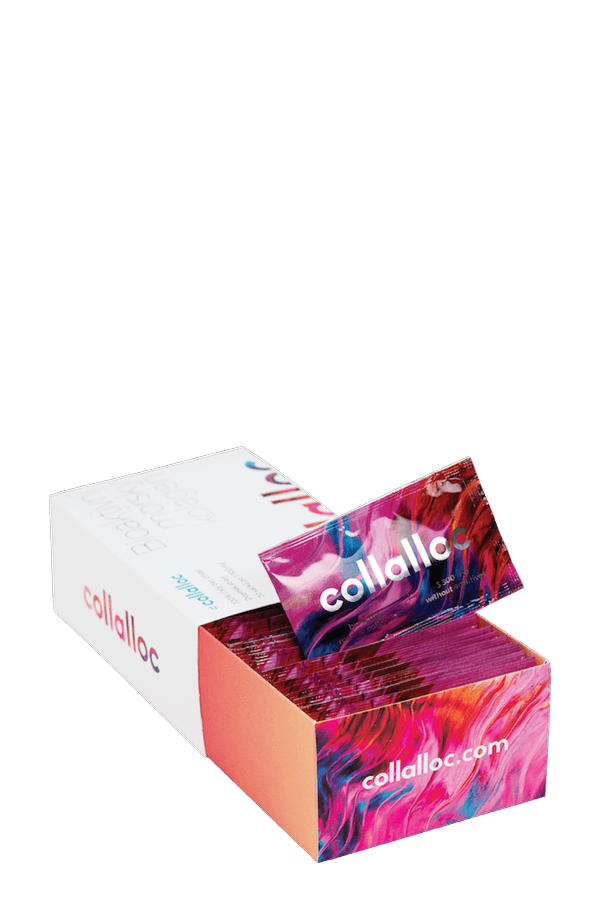
You will not find the collagen content on the packaging of ordinary foods, as the mandatory nutrition declaration only gives total protein. The measurements of ready-to-eat servings we found come from Japan: researchers analysed the meat from everyday dishes and found 0.2 to 2.5 g of collagen in one serving of most of them. Only beef tendon, eel with skin and shark tail had considerably more, 7.6 to 13.3 g per serving (Asai et al., 2019). For comparison, one sachet of collalloc kolagen contains 3.3 g of collagen.
| Food | Collagen | How much per serving |
|---|---|---|
| Beef tendon, eel with skin | Yes | 7.6 to 13.3 g |
| Everyday meat or fish dish | Yes | 0.2 to 2.5 g |
| Bone broth | Yes | Depends on the recipe, varies widely |
| Gelatine, jellied meat, aspic | Yes | Not stated |
| Chicken skin, cartilage, feet | Yes | No serving data |
| Milk, cheese, eggs | No | Other proteins |
| Fruit, vegetables, pulses, nuts | No | Plants do not make it |
The figures in the first two rows come from the Japanese measurements (Asai et al., 2019), the information on broth from an Australian study (Alcock et al., 2019).
Bone broth: how much collagen it really provides
Bone broth has a reputation as the best natural source of collagen. An Australian study, however, showed that it cannot be relied on. Researchers analysed broths from shops, from a café and cooked in the laboratory, and measured key amino acids for collagen formation in them, including glycine, proline and hydroxyproline. Broth made to a standard recipe contained considerably less of them than 20 g of a collagen supplement, the dose used in research. Broths made from different recipes varied a great deal, the ones from the café had the most amino acids, and shop-bought broths had fewer amino acids than home-made ones (Alcock et al., 2019).
By all means make broth, as it is good food. Just do not expect every mug to provide the same amount of collagen.
Is collagen from food absorbed in the same way as from a supplement?
Not entirely. The body does not absorb collagen from food whole: digestive enzymes break it down into amino acids and short peptides. How much of it reaches the blood depends on how well they break it down. After volunteers ate cooked shark meat, nine collagen peptides appeared in their blood, but for most of them only about 30% of the amount measured after a collagen hydrolysate with the same collagen content. In the laboratory, the digestive enzymes pepsin and pancreatin likewise released only about 30% of the collagen from the meat (Asai et al., 2019).
After gelatine, which is collagen broken down by cooking, the peptide Pro-Hyp in the blood of nine volunteers rose to 15.5 nmol/ml within 2 hours. A low-molecular-weight hydrolysate raised the levels of the peptides Pro-Hyp and Hyp-Gly significantly more than gelatine, but even after gelatine, peptides containing hydroxyproline rose to micromolar levels in the blood (Iwasaki et al., 2022). What these differences mean for the skin or other tissues was not examined in these studies. We describe the whole journey of collagen through the body in the article What really happens to collagen in the body.
Plants have no collagen: what the body needs to make it
Fruit, vegetables, pulses, nuts and cereals contain no collagen, because plants do not make it. Products called vegan collagen therefore usually contain no collagen; we look at them in the article Vegan and plant collagen. The body does, however, make collagen itself, and to do so it needs substances supplied by both plant and animal foods:
- Protein. Glycine, proline and hydroxyproline together make up 57% of the amino acids in collagen. The body can make glycine and proline from other substances, and hydroxyproline forms from proline only in the finished collagen chain (Li and Wu, 2018). The body takes the raw materials from the protein you eat, whether it comes from meat, fish, eggs, dairy products or pulses. Collagen itself is an incomplete protein, as it lacks the essential amino acid tryptophan (Paul et al., 2019), so it cannot replace other proteins.
- Vitamin C. Without ascorbic acid, proline in newly forming collagen is not converted into hydroxyproline, which holds its triple helix together (Peterkofsky, 1991). Vitamin C contributes to normal collagen formation for the normal function of skin. You will find it in peppers, kiwi fruit, citrus fruit, broccoli or strawberries.
- Copper. It is bound by a group of enzymes called lysyl oxidases, which start the cross-linking of collagen and elastin (Vallet and Ricard-Blum, 2019). It is found in nuts, seeds, pulses and offal.
We write about the amino acids of collagen in detail in the article Glycine, proline, hydroxyproline.
How we do it at collalloc
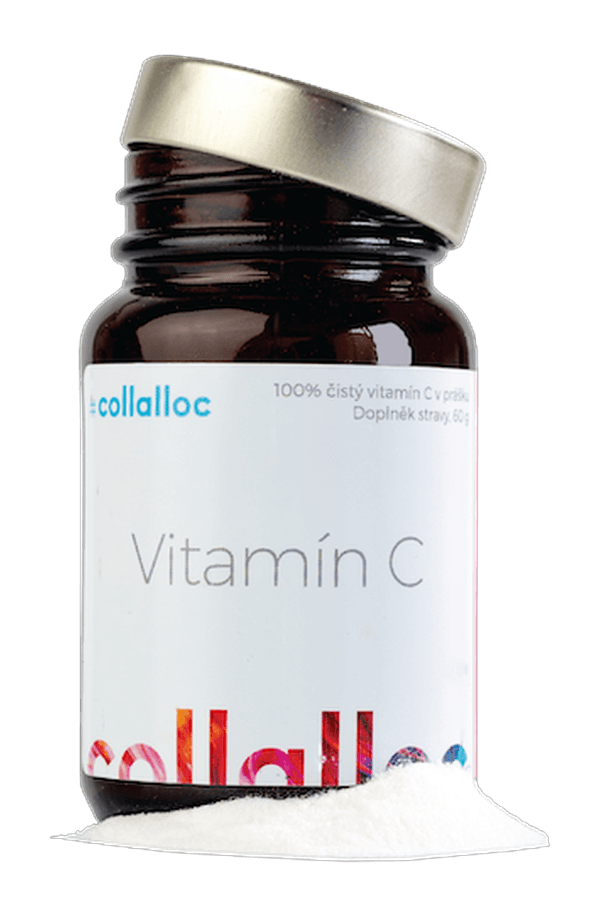
One sachet of collalloc kolagen contains 3,300 mg of hydrolysed marine collagen from North Sea fish with a molecular weight of around 500 Da. So it is collagen that has already been broken down into short peptides, and you stir it into 200 ml of a cold or lukewarm drink up to 60 °C. The sachets contain no vitamin C. If you want it in one dose with collagen, you can choose the liquid NANO 2.0 with 700 mg of collagen and 80 mg of vitamin C in 1 ml, or the separate collalloc Vitamin C with 100 mg of L-ascorbic acid per serving. Vitamin C contributes to normal collagen formation for the normal function of skin. No food supplement can replace a varied diet.
Frequently asked questions
Which foods contain collagen?
Only animal foods, mainly those from connective tissues: skin, tendons, cartilage, bone broth, gelatine, jellied meat or fish with skin. Japanese researchers measured 0.2 to 2.5 g of collagen in the meat from one serving of most everyday dishes (Asai et al., 2019). Plant foods contain no collagen.
What has the most collagen?
Of the dishes measured, beef tendon, eel with skin and shark tail had the most collagen, 7.6 to 13.3 g per serving (Asai et al., 2019). In general, there is a lot of it in skin, tendons, cartilage and gelatine, while lean meat has less.
Do fruit or vegetables contain collagen?
No. Plants do not make collagen, so you will not find it in fruit, vegetables, pulses, nuts or grains. They do, however, supply vitamin C and protein, which the body needs to make its own collagen. Vitamin C contributes to normal collagen formation for the normal function of skin.
How much collagen is in bone broth?
There is no exact figure, as it depends on the bones, the cooking time and the recipe. Broth made to a standard recipe contained considerably fewer of the key amino acids of collagen than 20 g of a collagen supplement, and broths made from different recipes varied a great deal (Alcock et al., 2019).
Is collagen from food absorbed in the same way as from a supplement?
Not entirely. After cooked fish meat, the blood contained only about 30% of the amount of most collagen peptides measured after a hydrolysate with the same collagen content (Asai et al., 2019). After gelatine, the peptide Pro-Hyp rose to 15.5 nmol/ml, while a low-molecular-weight hydrolysate raised peptide levels significantly more (Iwasaki et al., 2022).
What does the body need for collagen synthesis?
Mainly protein and vitamin C. Glycine, proline and hydroxyproline make up 57% of the amino acids in collagen (Li and Wu, 2018), and ascorbic acid is needed to convert proline into hydroxyproline (Peterkofsky, 1991). Vitamin C contributes to normal collagen formation for the normal function of skin.
Sources
- Amount of Collagen in the Meat Contained in Japanese Daily Dishes and the Collagen Peptide Content in Human Blood after Ingestion of Cooked Fish Meat Asai T., Takahashi A., Ito K., Uetake T., Matsumura Y., Ikeda K. et al., Journal of Agricultural and Food Chemistry, 2019
- Bone Broth Unlikely to Provide Reliable Concentrations of Collagen Precursors Compared With Supplemental Sources of Collagen Used in Collagen Research Alcock R. D., Shaw G. C., Burke L. M., International Journal of Sport Nutrition and Exercise Metabolism, 2019
- Comparison of gelatin and low-molecular weight gelatin hydrolysate ingestion on hydroxyproline (Hyp), Pro-Hyp and Hyp-Gly concentrations in human blood Iwasaki Y., Nakatogawa M., Shimizu A., Sato Y., Shigemura Y., Food Chemistry, 2022
- Significant Amounts of Functional Collagen Peptides Can Be Incorporated in the Diet While Maintaining Indispensable Amino Acid Balance Paul C., Leser S., Oesser S., Nutrients, 2019
- Roles of dietary glycine, proline, and hydroxyproline in collagen synthesis and animal growth Li P., Wu G., Amino Acids, 2018
- Ascorbate requirement for hydroxylation and secretion of procollagen: relationship to inhibition of collagen synthesis in scurvy Peterkofsky B., The American Journal of Clinical Nutrition, 1991
- The collagen family Ricard-Blum S., Cold Spring Harbor Perspectives in Biology, 2011
- Lysyl oxidases: from enzyme activity to extracellular matrix cross-links Vallet S. D., Ricard-Blum S., Essays in Biochemistry, 2019